

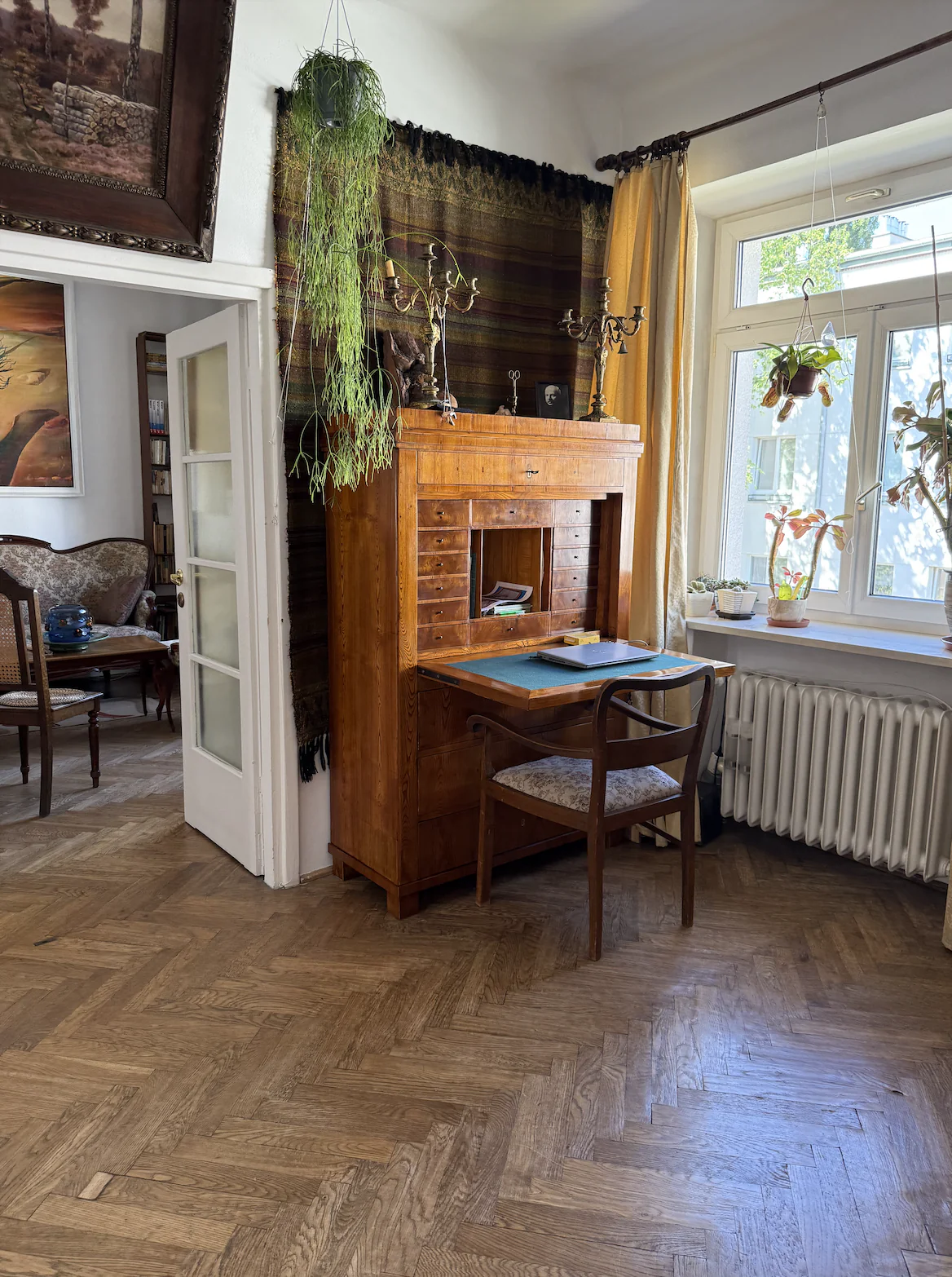
Imagine a piece of furniture that not only remembers the times of the great national uprisings, but bears their scars. A piece full of secrets, with hidden compartments once opened by black ribbons, which for decades stood witness to the turbulent destiny of a certain Polish family.
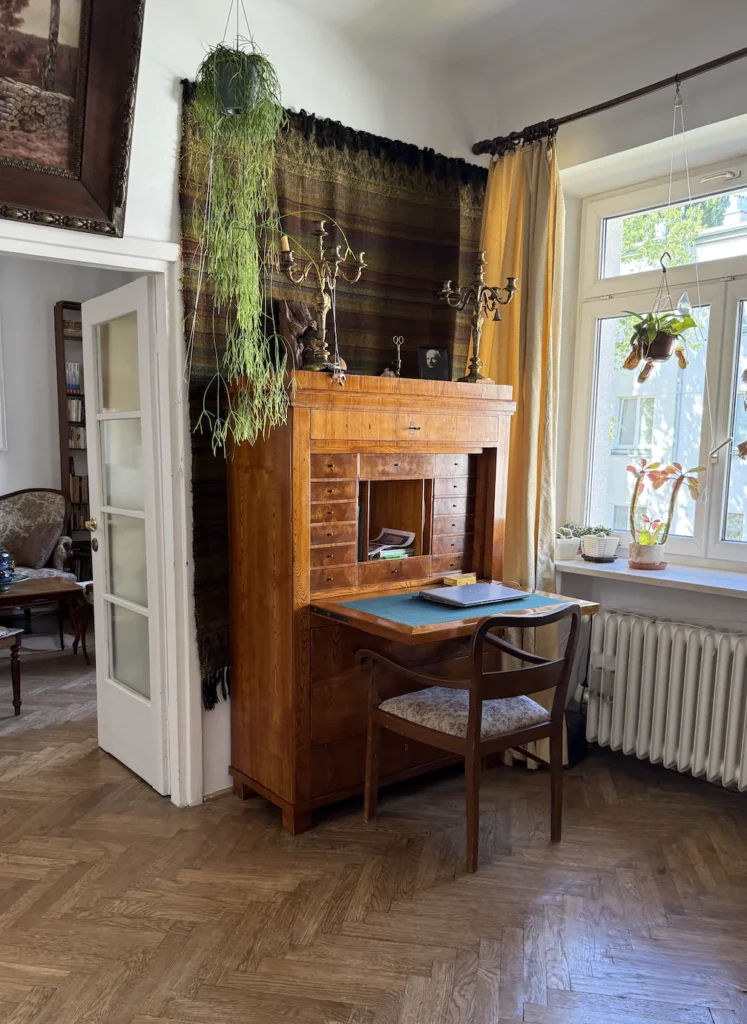
Recently, our workshop completed the conservation work on a remarkable piece—an early 19th-century Biedermeier ash secretary. It arrived to our studio in a very poor state of preservation.
The Biedermeier style (which reigned in Europe during the first half of the 19th century) is associated with functionality, domestic comfort, and an elegance that does not shout wealth, but rather captivates through its form. The secretary presented here is a classic piece of wall furniture with an architectural structure.
How do we know it was crafted in a Polish workshop? It was revealed to us by the materials and the finishing details. Native craftsmen of that era frequently utilized ash veneer—a thick, decorative layer of wood used to face the fronts. The distinctive grain pattern of the ash wood gave the furniture a unique, warm character.

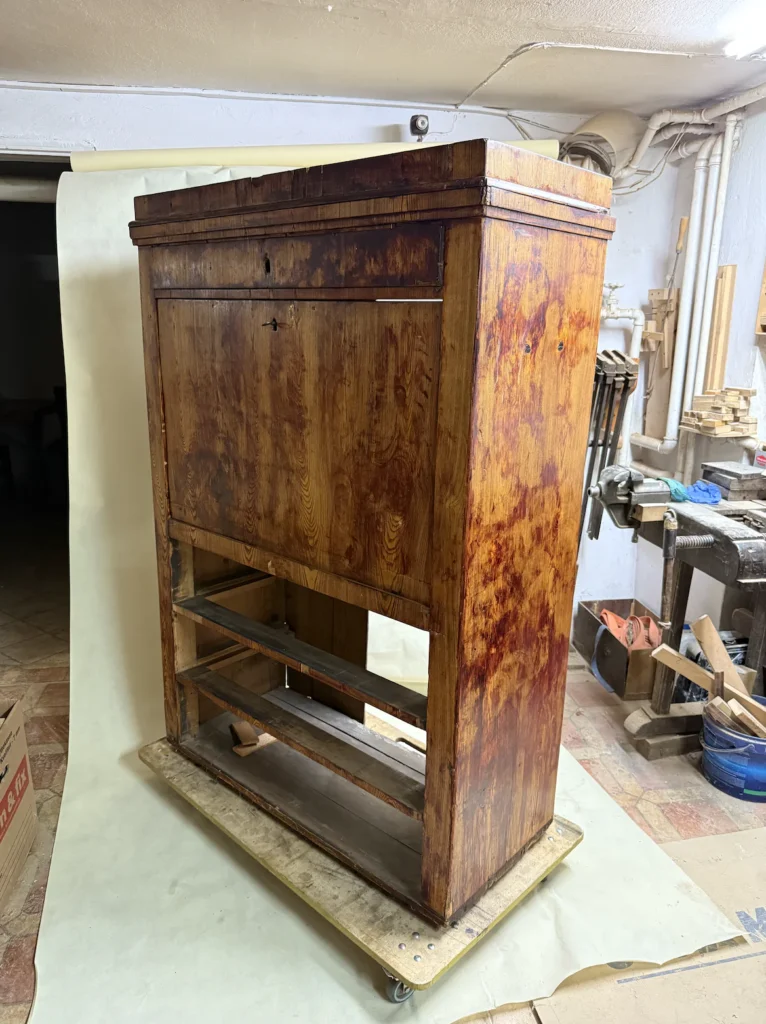
The piece suffered from numerous relocations and being stored in damp conditions, which led to cracking and the peeling of the veneer. However, its most fascinating secret lay in its color. According to family lore, the secretary was likely painted entirely black following the January Uprising. In the second half of the 19th century, it was fashionable in Polish homes to manifest national mourning after failed insurrections, and Poles would coat even the most beautiful inlaid furniture in black.
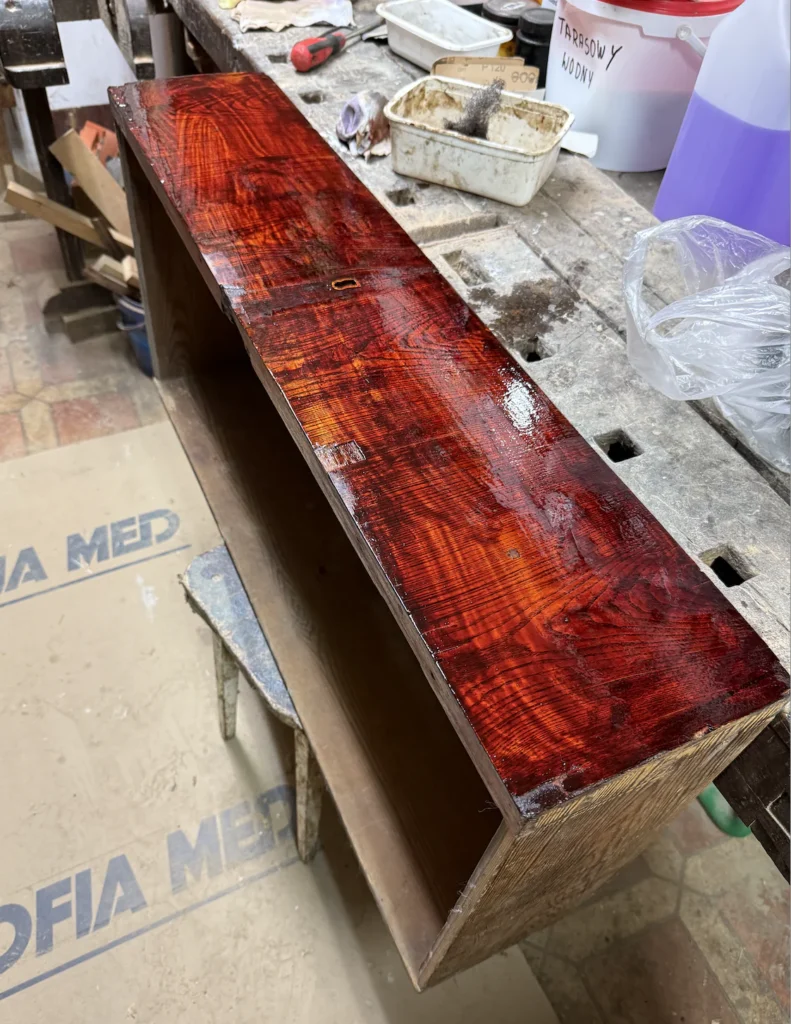
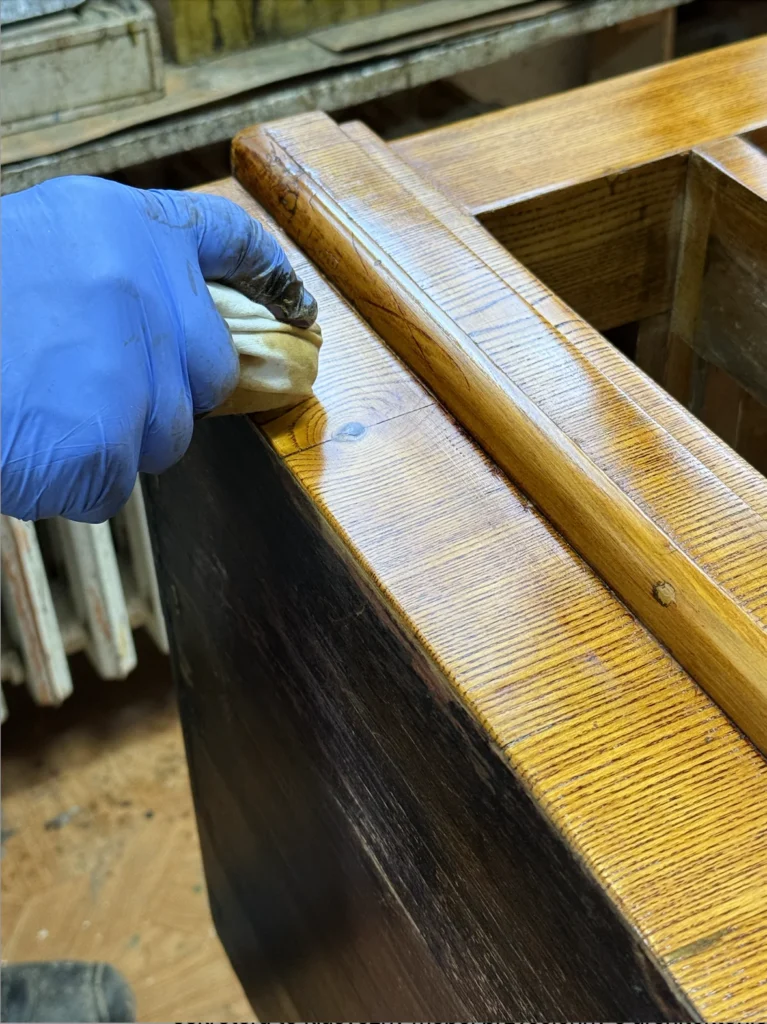
In the 1970s, the current owner attempted to wash away this memento of historical events on their own. Unfortunately, the incredibly strong 19th-century red pigment used as an undercoat beneath the black had embedded itself deep into the pores of the wood, leaving behind an intense red coloration instead of the black. Removing these accumulated layers proved to be one of our greatest challenges.
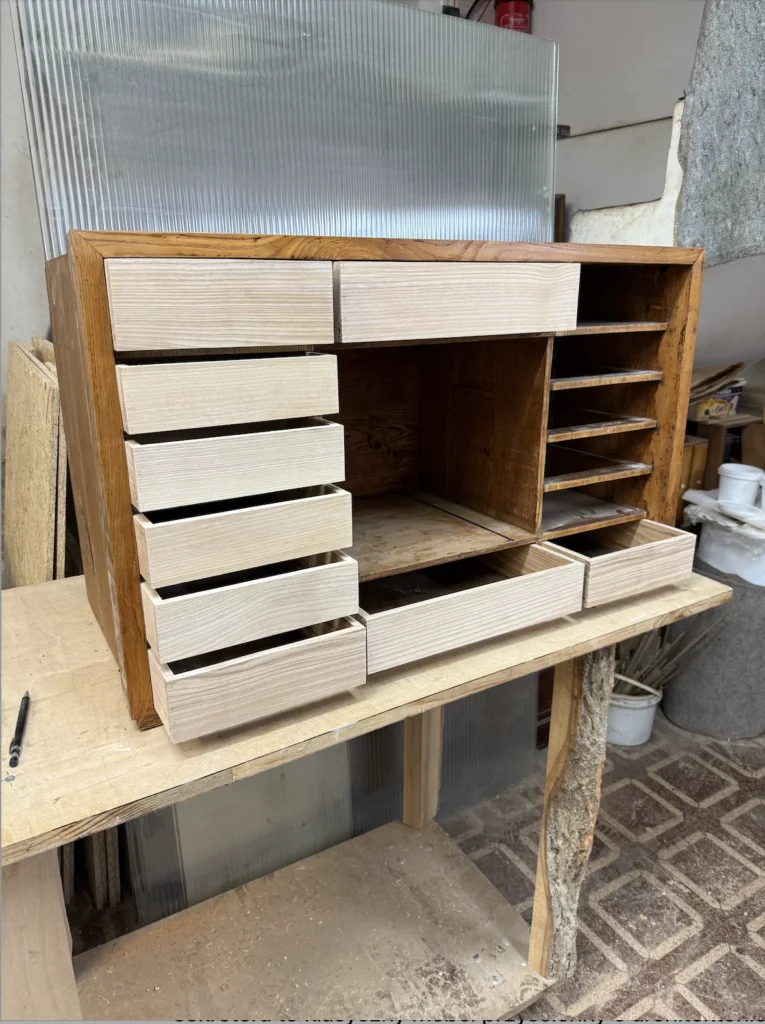
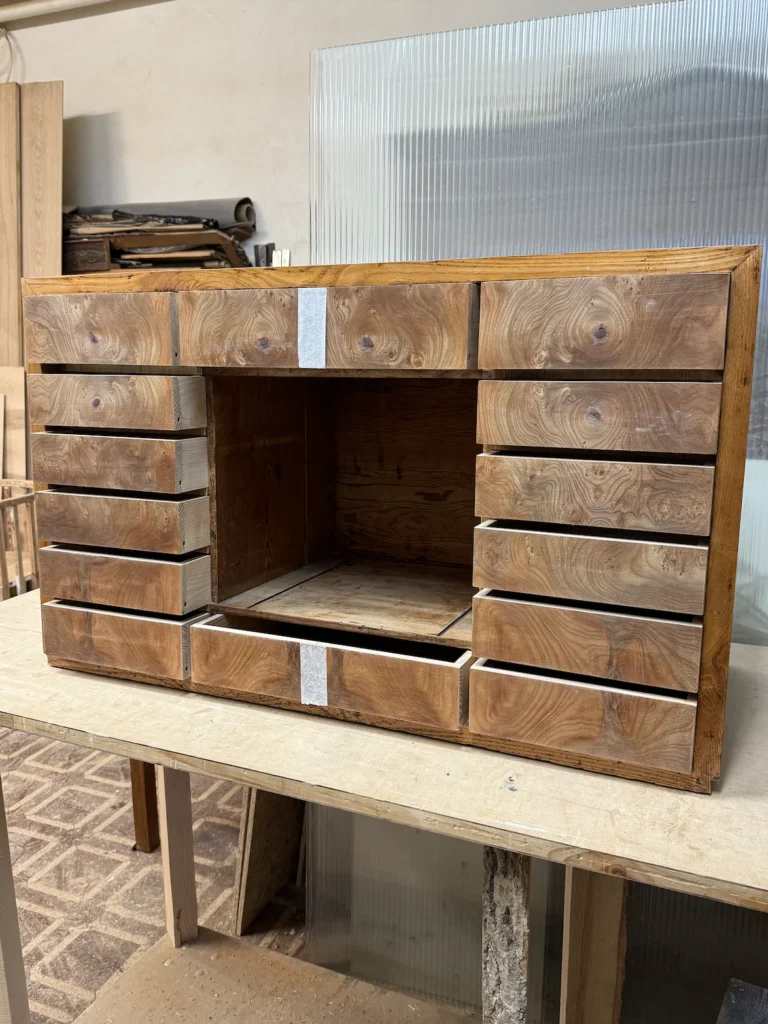
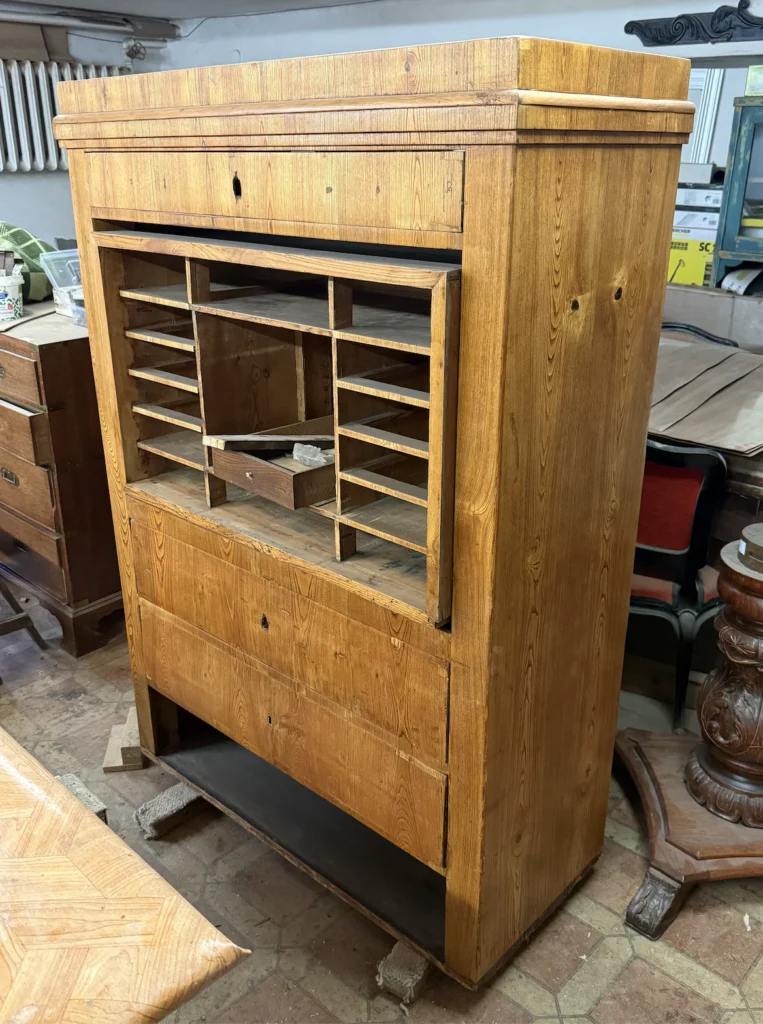
It is said that a secretary desk has its own ‘heart’—the inner space concealed behind the main drop-front. In this case, the heart had survived only in a vestigial state. An analysis of the interior layout revealed that the central position was occupied by a so-called tabernacle (a decorative recess), around which secret compartments were hidden.
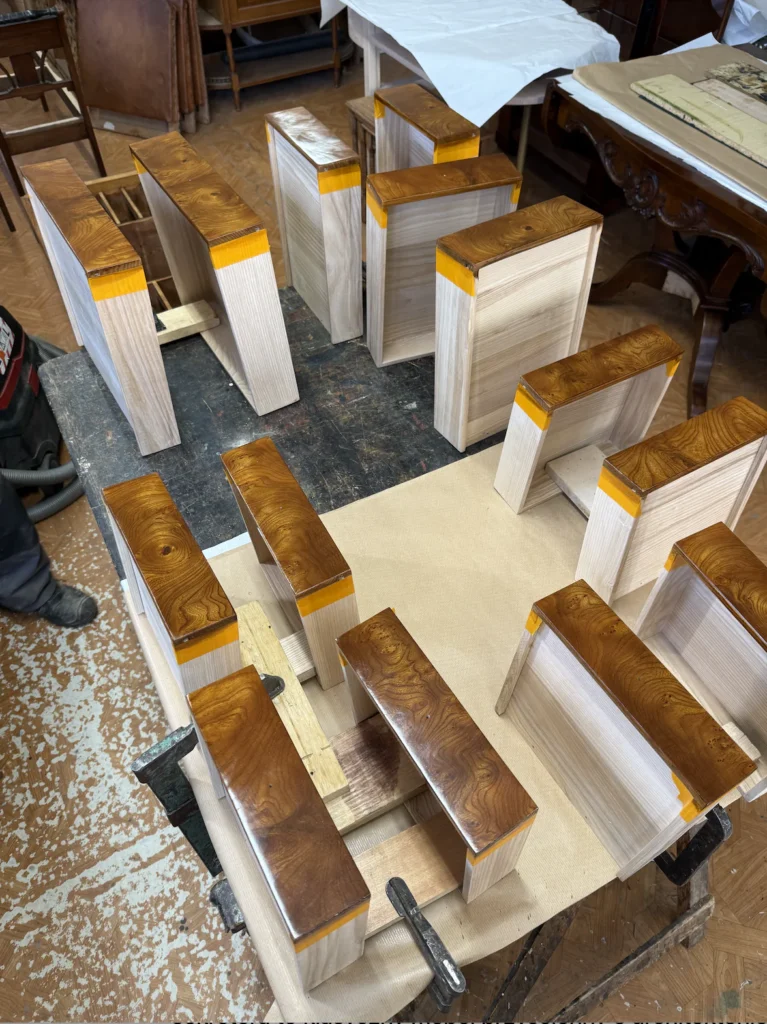
We managed to salvage four original, shallow drawers made of pine. Interestingly, instead of metal handles, they were pulled out using delicate black ribbons. These were camouflaged by a special movable panel that slid into runners.
Unfortunately, the entire lower drawer of the main body was missing. The base had vanished completely—the piece had neither feet nor a lower plinth (someone had later crudely nailed ordinary pine slats to the corners). Most of the locks and brass escutcheons (the metal fittings around keyholes) were missing, causing users over the years to damage the wood while trying to force the drawers open.
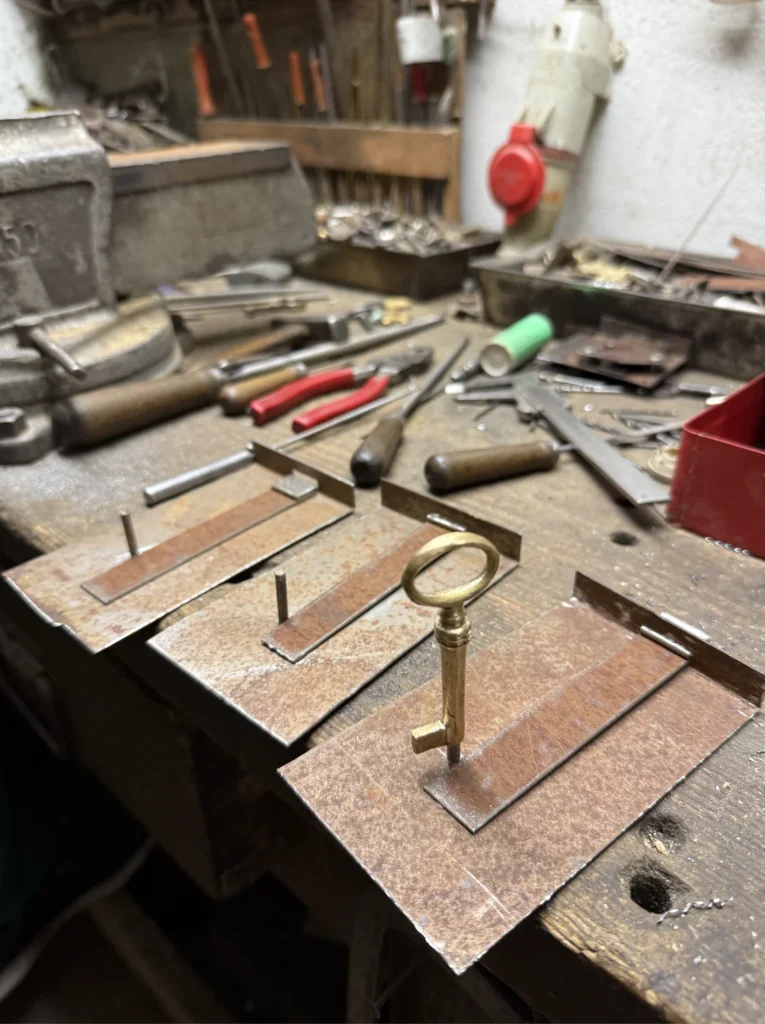
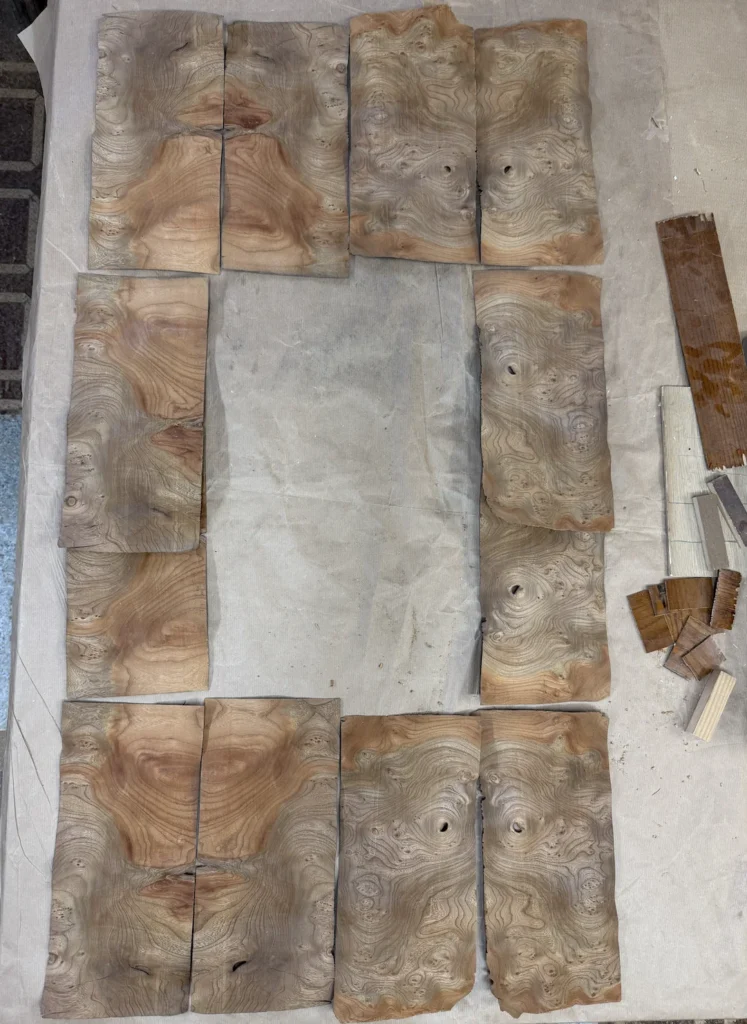
The goal of the project was not to create a ‘new’ piece of furniture, but to halt the degradation and restore the original’s splendor while respecting its history. We fashioned the missing lower drawer and the back panel from aged, century-old timber. The new ash veneer on the front was perfectly matched in terms of grain pattern to integrate seamlessly with the rest of the composition. Drawing on historical analogies and the proportions of the piece, we reconstructed the simple, classic feet and the molding surrounding the bottom of the carcass. The interior of the secretary received new ash wood drawers, the fronts of which were finished with a decorative elm veneer. The writing surface, previously lined with black broadcloth, was finished during restoration with broadcloth stretched over cardboard in a deep, elegant bottle green color, which contrasts beautifully with the golden ash.
Finally, after color integration, we protected the piece using traditional methods: shellac polish and natural wax.
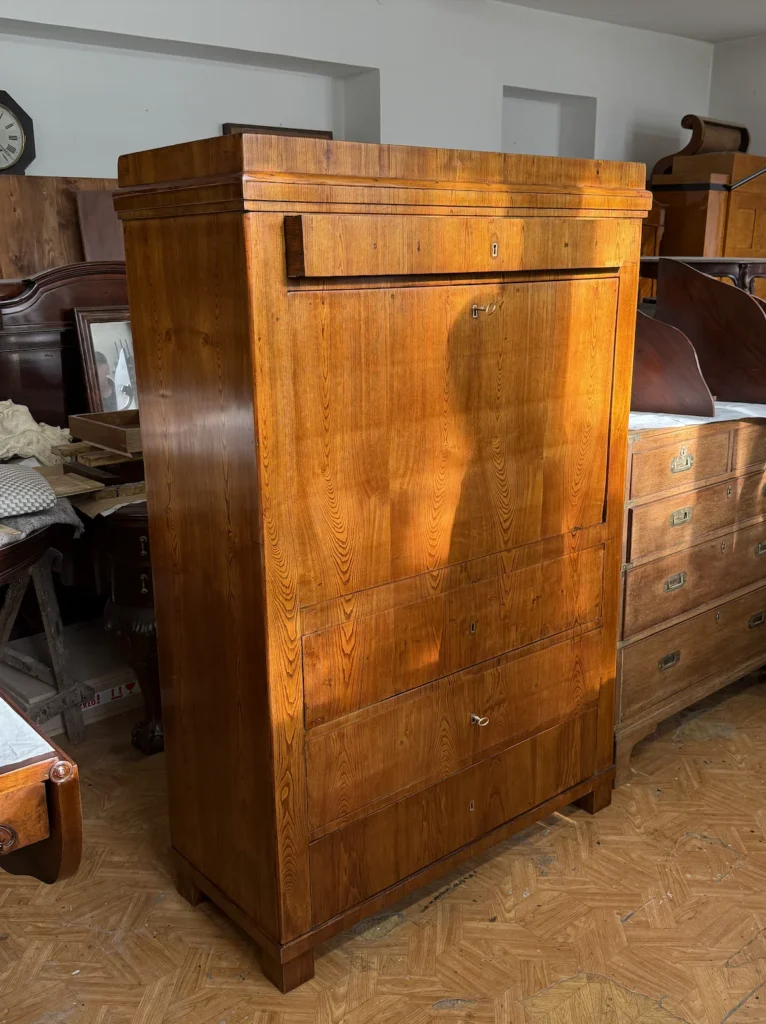
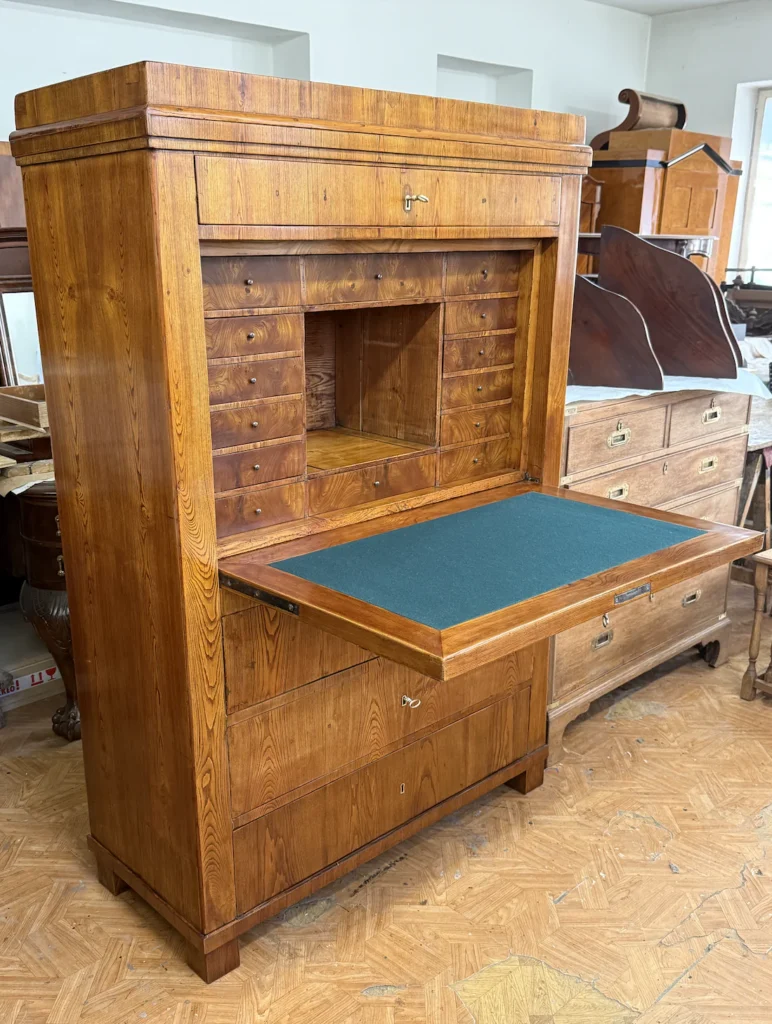
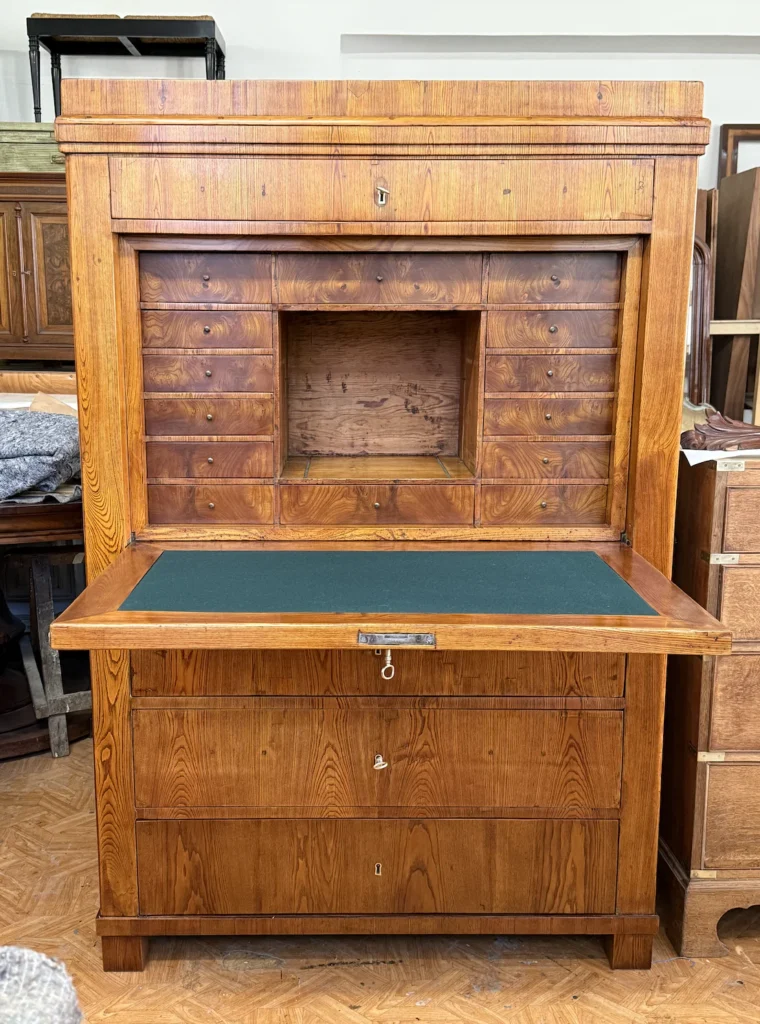
Thanks to our consultations with the client, we managed to achieve a perfect compromise. The secretary has not lost its authentic spirit—the traces of past centuries are still visible on it—yet it has regained full functionality. Today, it can once again be used to store letters, documents, and family heirlooms, while serving as the brightest (and most mysterious) centerpiece of the living room.
The completion of such complex conservation work is proof that patience, respect for craftsmanship, and a touch of scientific curiosity can preserve an object for generations to come.