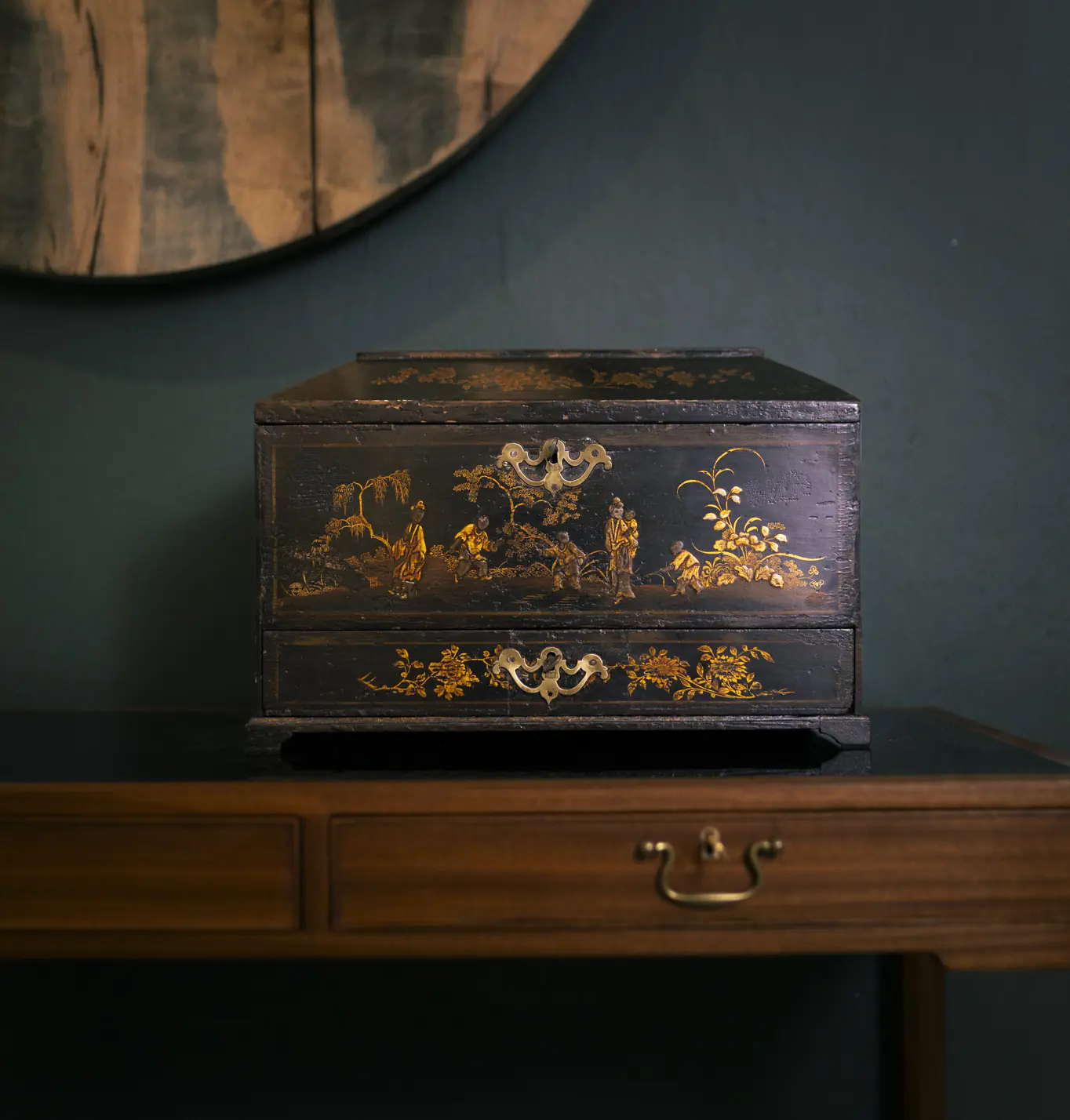
Nineteenth-century Chinoiserie represents the golden age of European decorative arts before mass industrial production took over. These pieces were made to be touched, admired under candlelight, and used to protect a person’s most intimate, private belongings.
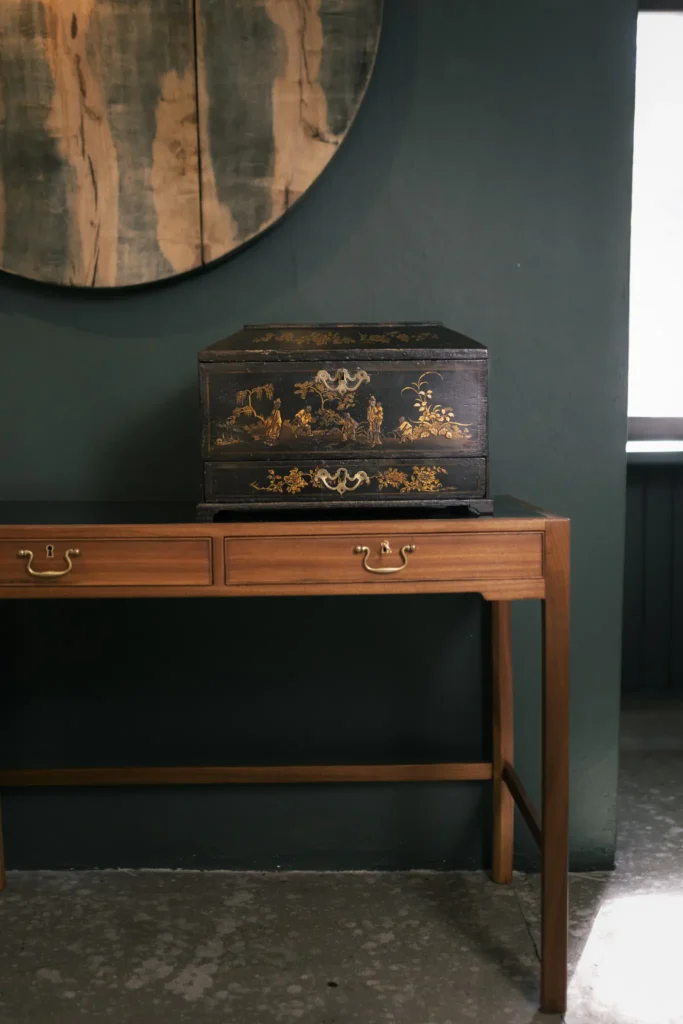
While Chinoiserie started in the late 17th century as a royal fantasy for the ultra-wealthy, the 19th century completely transformed it. By the 1800s, Chinoiserie evolved from an exclusive aristocratic luxury into the ultimate expression of Victorian worldliness, travel, and romanticism.
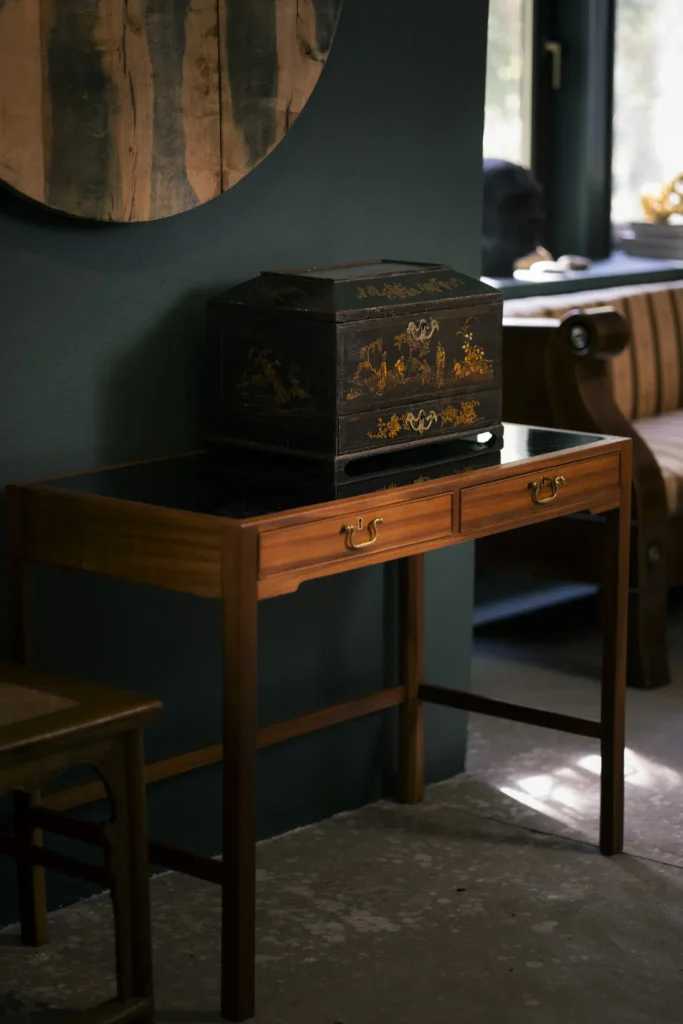
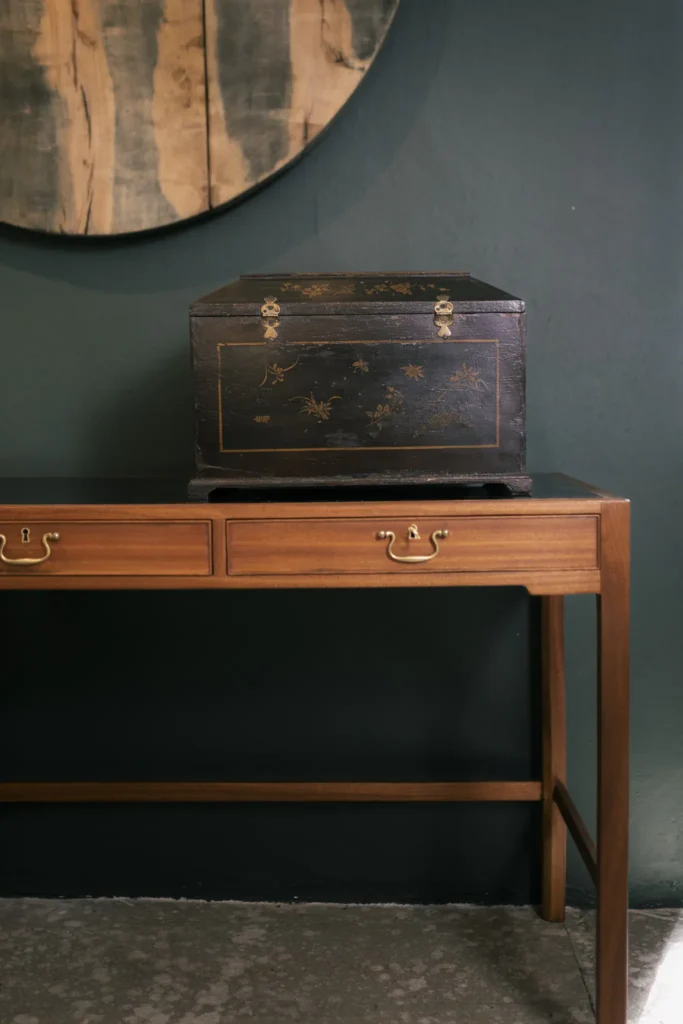
The 19th century kicked off with a massive Chinoiserie revival led by the British Prince Regent (later King George IV). He built the Brighton Pavilion, a seaside palace completely filled with spectacular, dramatic Chinoiserie furniture, gilded dragons, and faux-bamboo. This instantly made the style incredibly fashionable again among the British elite. To own a Chinoiserie sewing or tee box, or a small chest in this era meant you were mimicking the highest royal taste.


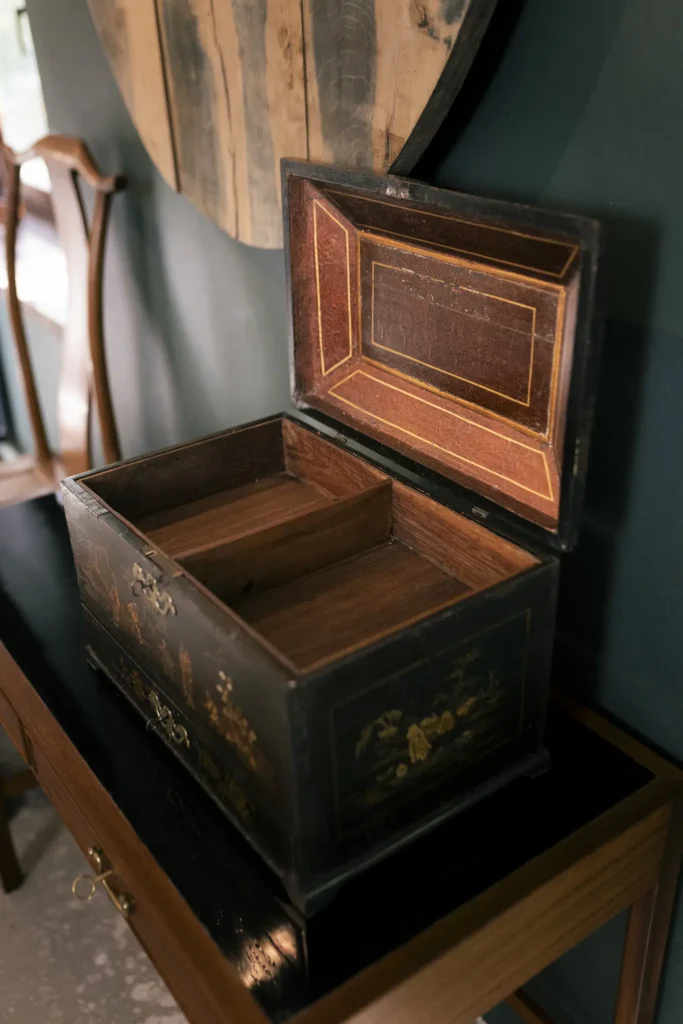
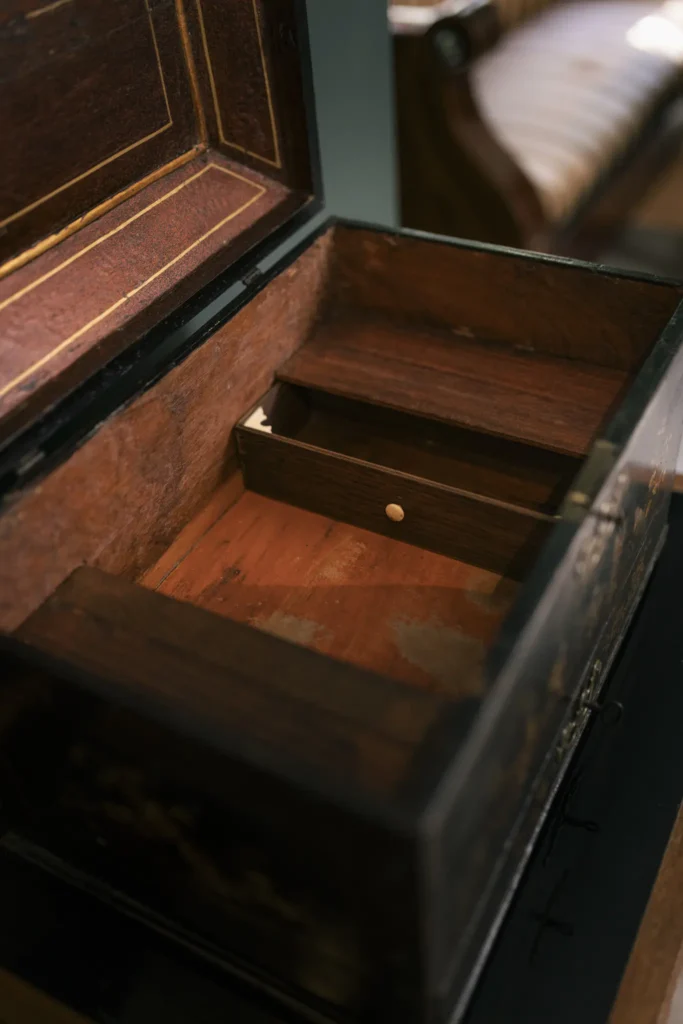
As the 1800s progressed, the British Empire expanded its global trade routes. Tea, silk, and spices were no longer just for kings—they became central to the everyday life of the wealthy Victorian upper class. Smaller boxes, tea caddies, and sewing chests decorated in the Chinoiserie style became conversational centerpieces in Victorian drawing rooms. Displaying a Chinoiserie box on your table was a subtle way of showing that you were well-traveled, educated, and connected to the exotic, far-off corners of the world.

Visually, 19th-century Chinoiserie became bolder and more dramatic than the delicate 18th-century versions. Artisans perfected the art of Japanning (European imitation lacquerwork), applying many thick layers of dark varnish (often black, deep red, or dark tortoiseshell) and decorating them with highly raised, heavily gilded scenes.
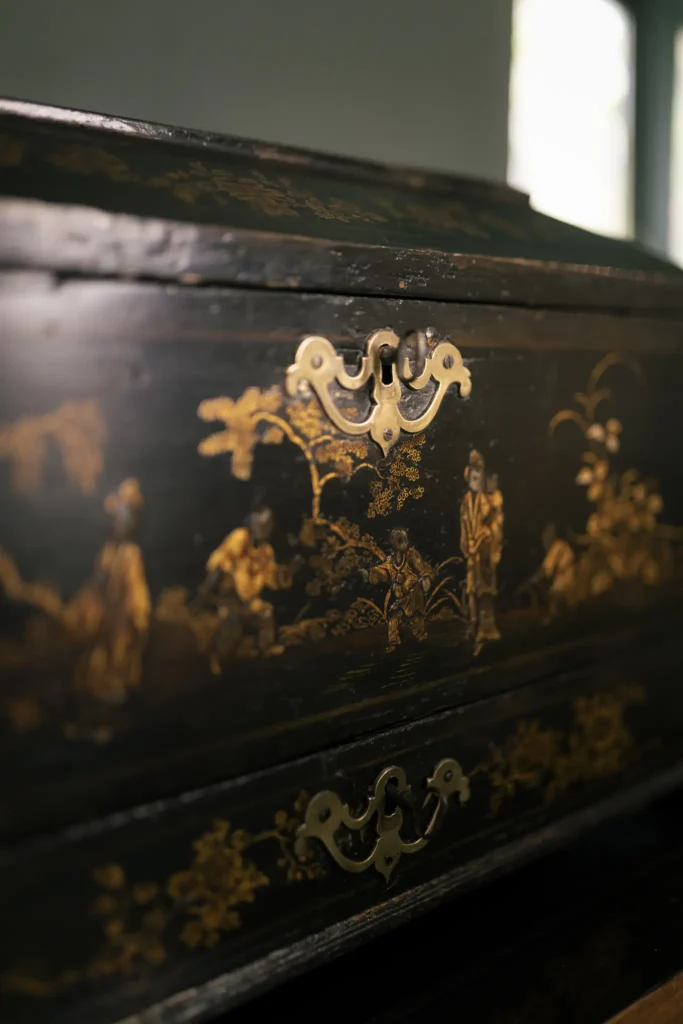
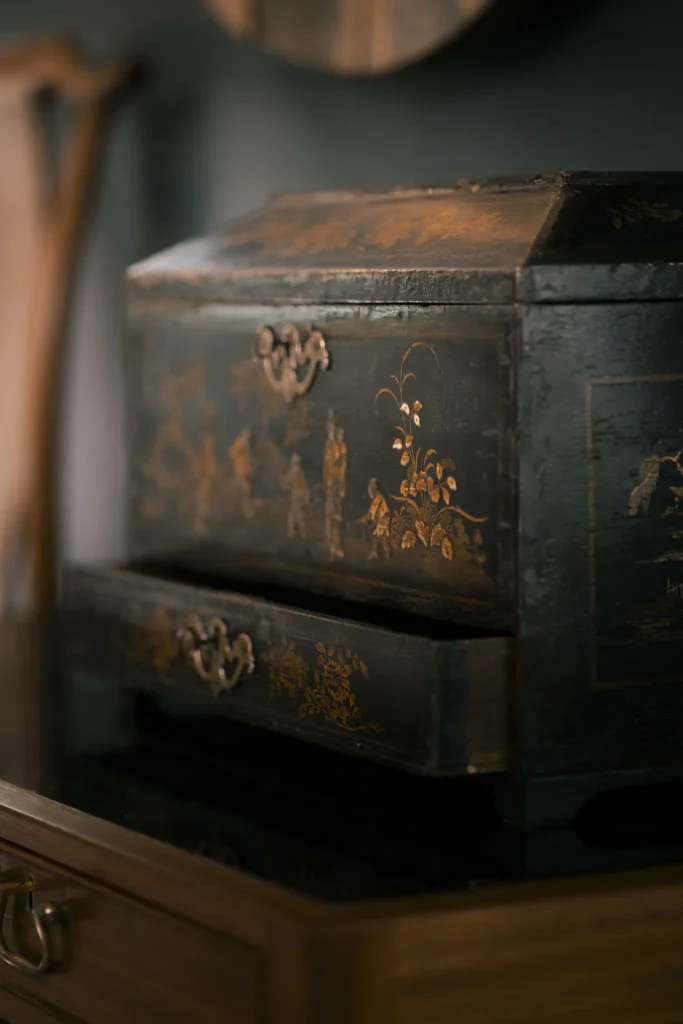

The scenes on these 19th-century boxes were highly romanticized, storytelling fantasies: Chinese scholars under weeping willows, floating pagodas, exotic birds, and sweeping, mystical mountainscapes.