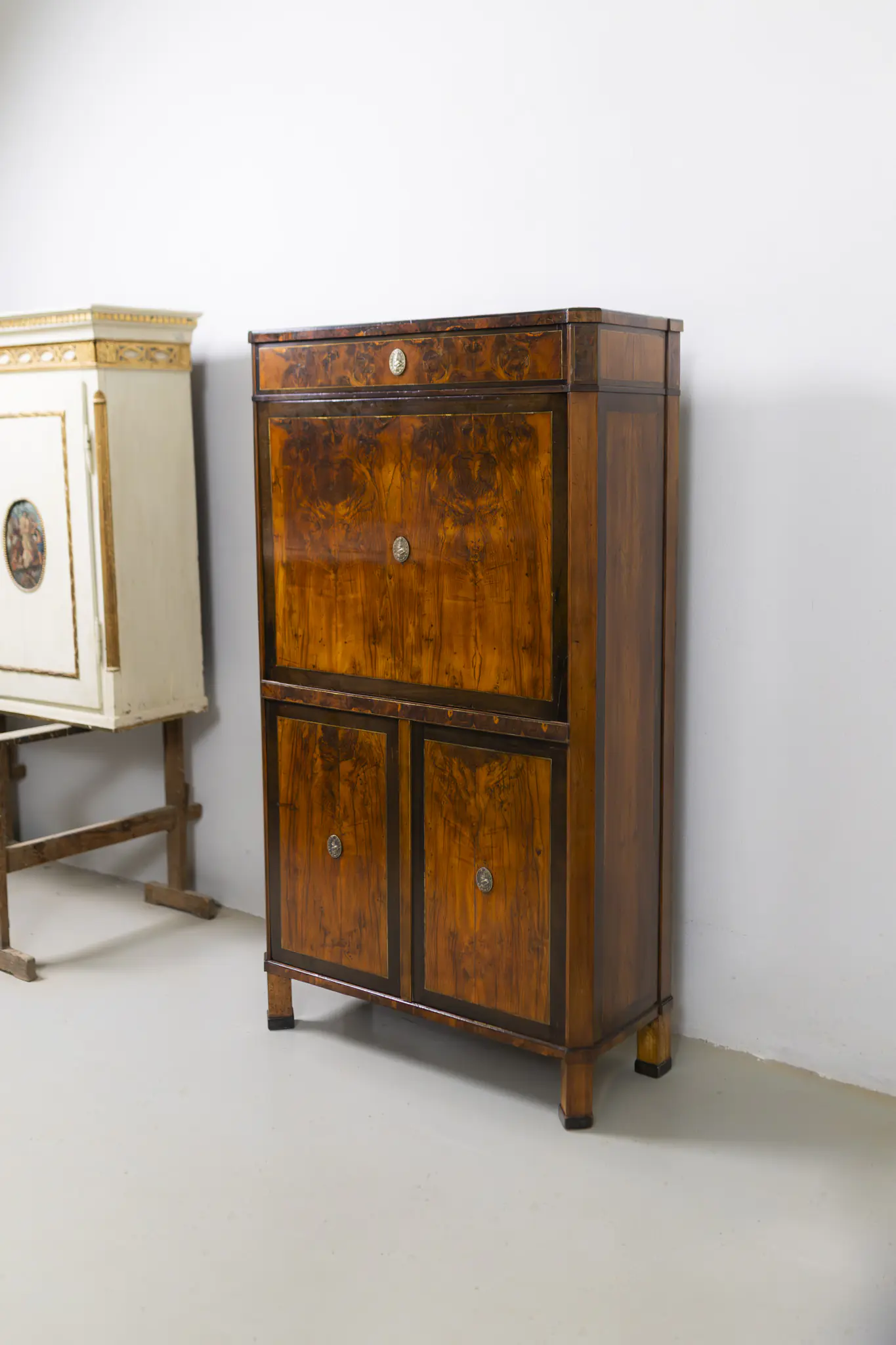
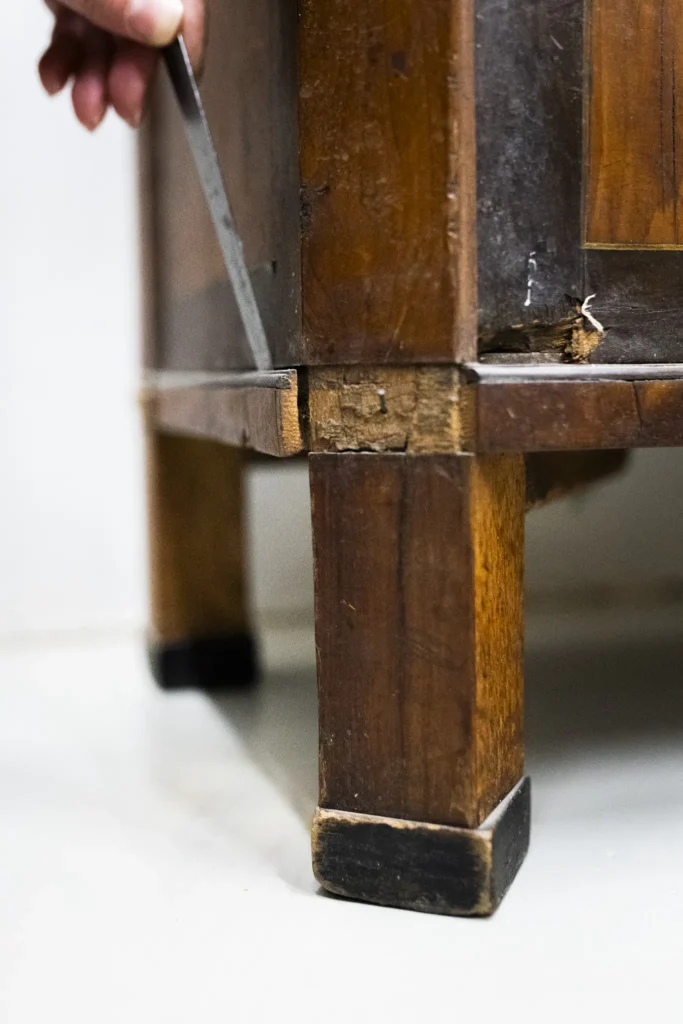
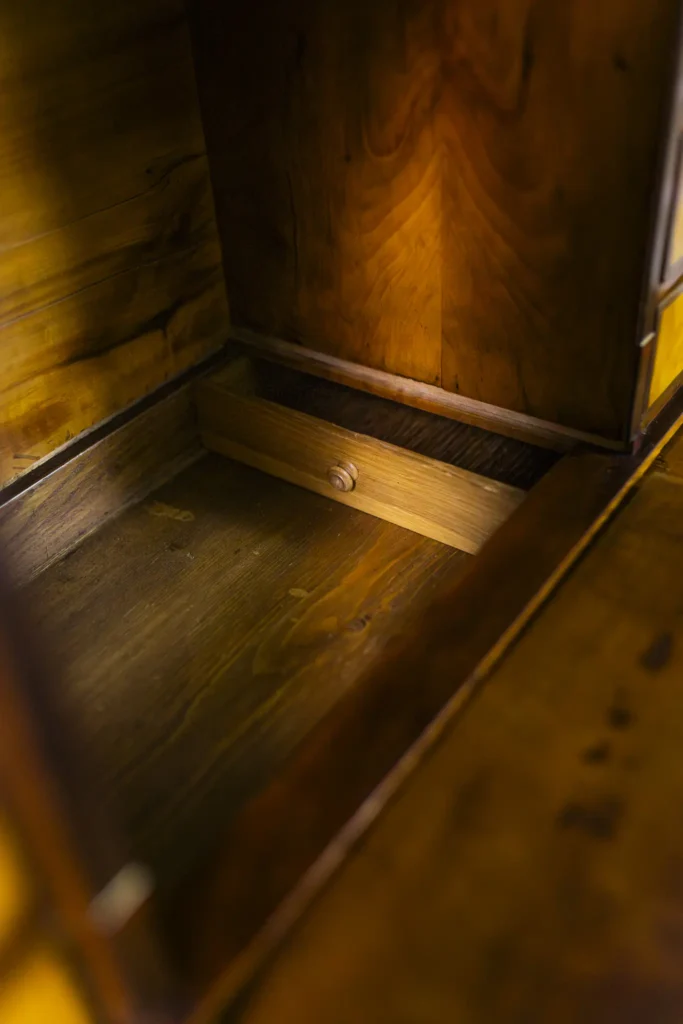
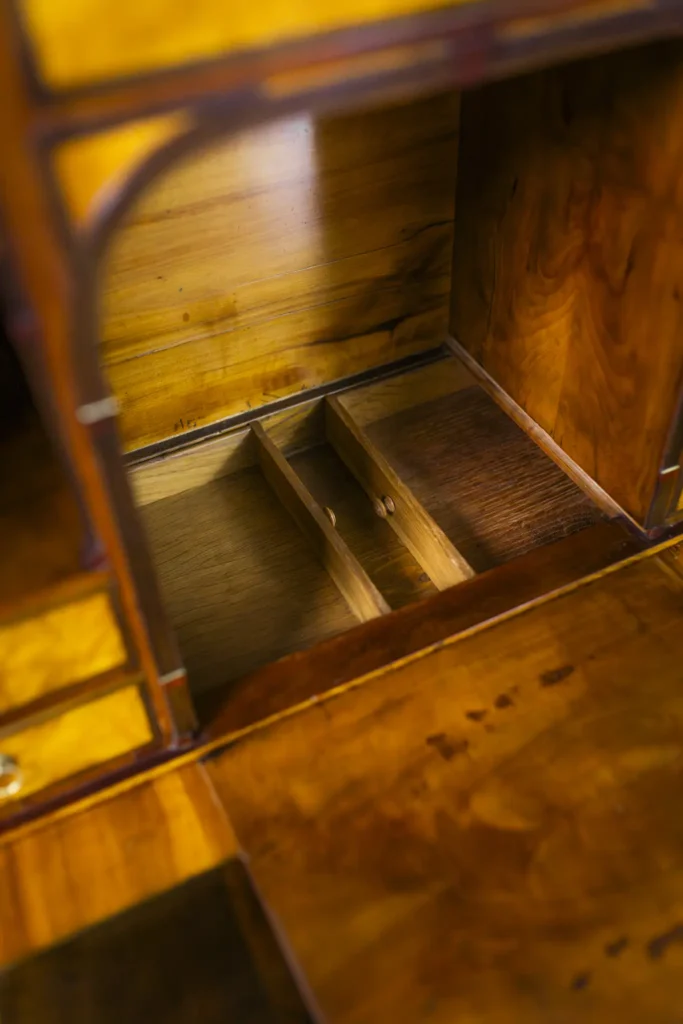
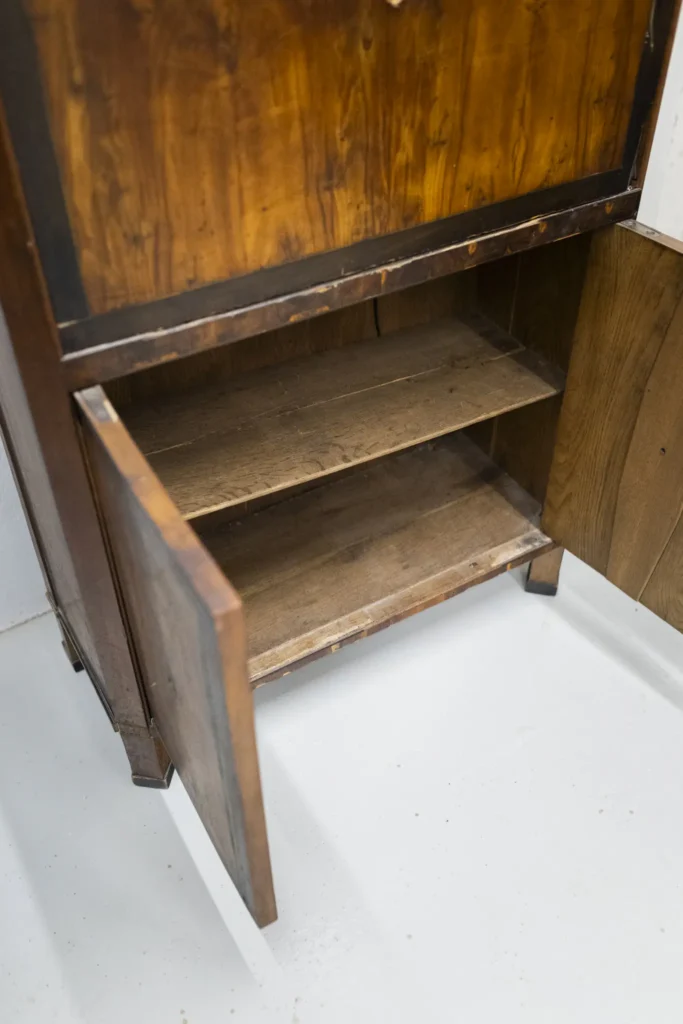
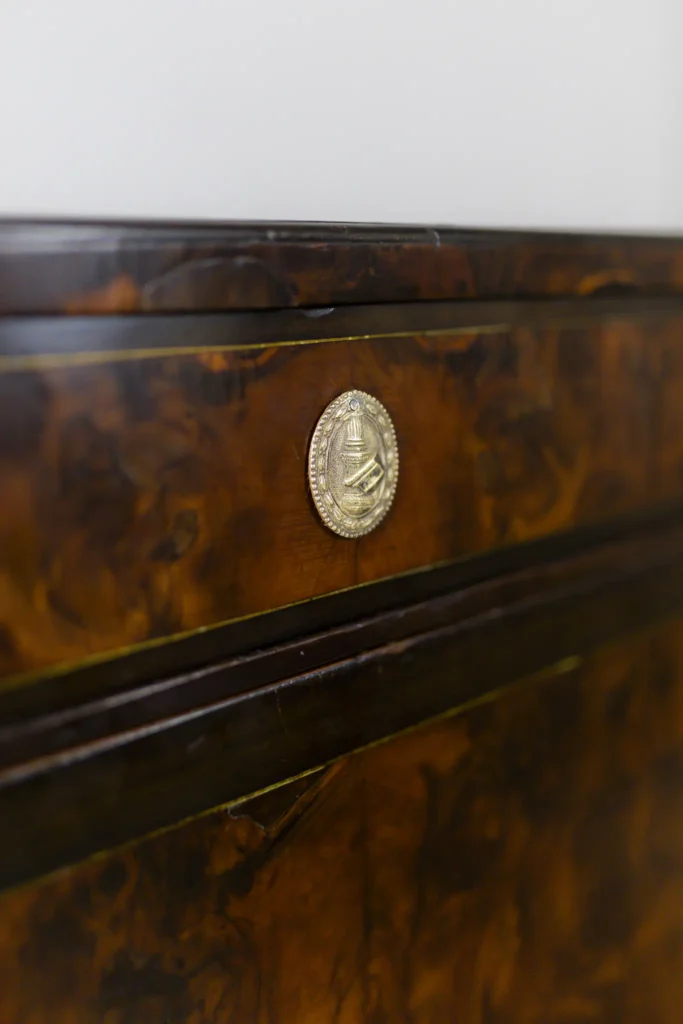
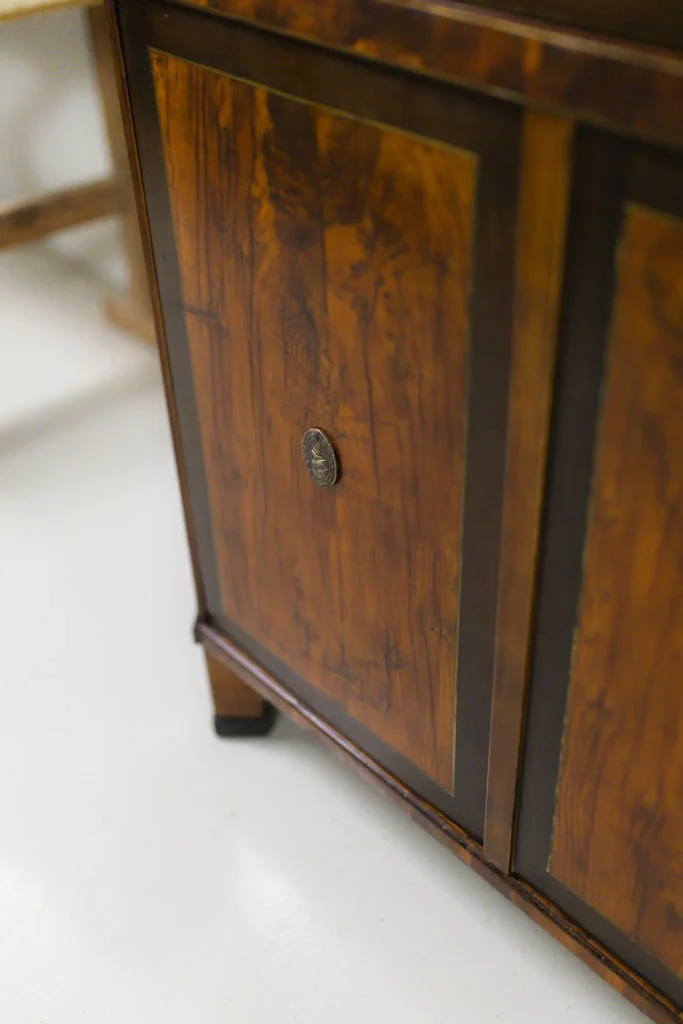
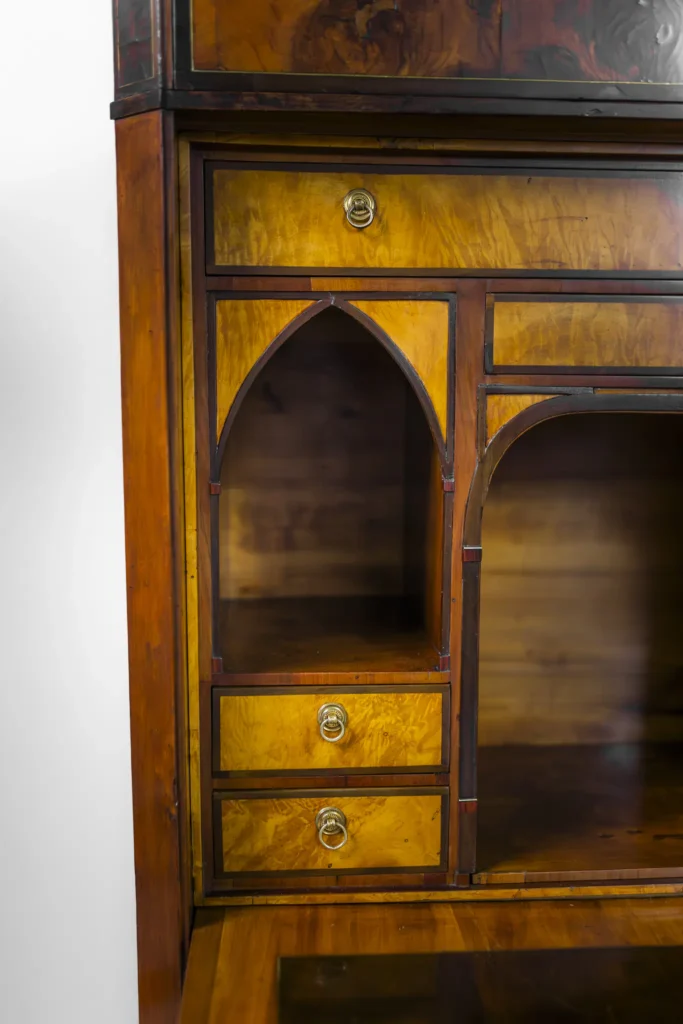
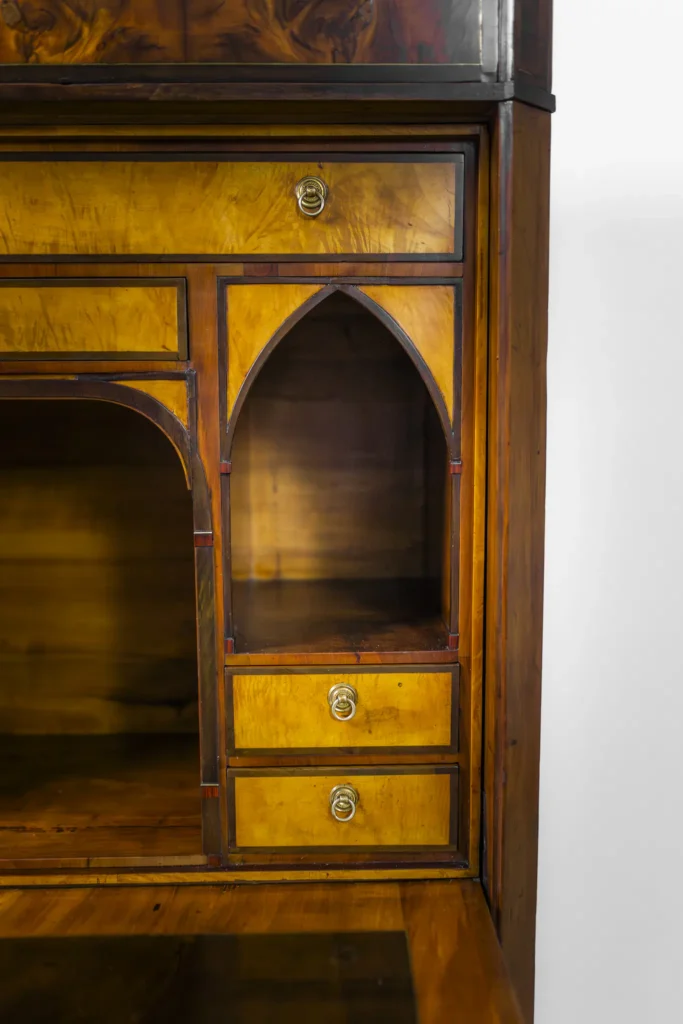
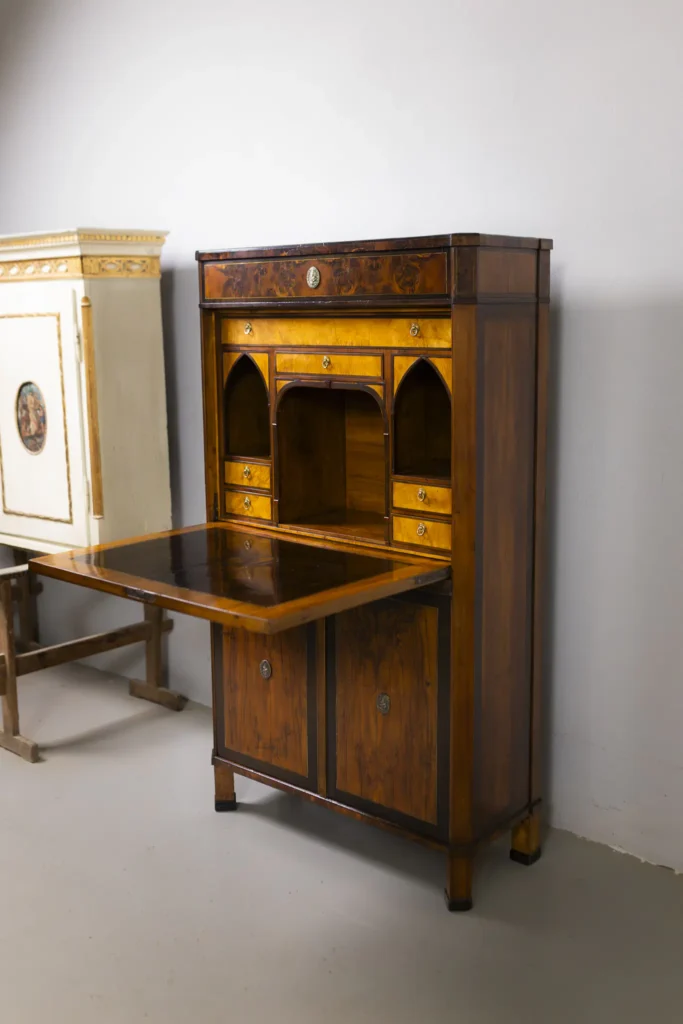
This unique piece of furniture has been in the possession of a Polish family for three generations. It arrived at our workshop in very poor condition, but fortunately all the original elements were preserved, giving us a solid foundation for a full reconstruction.
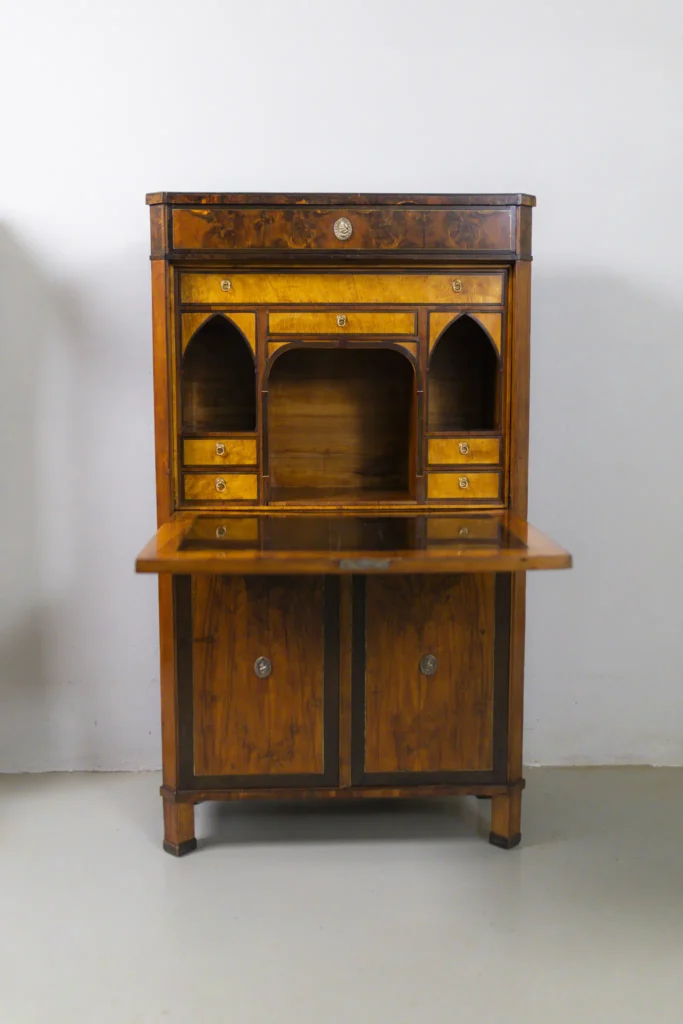
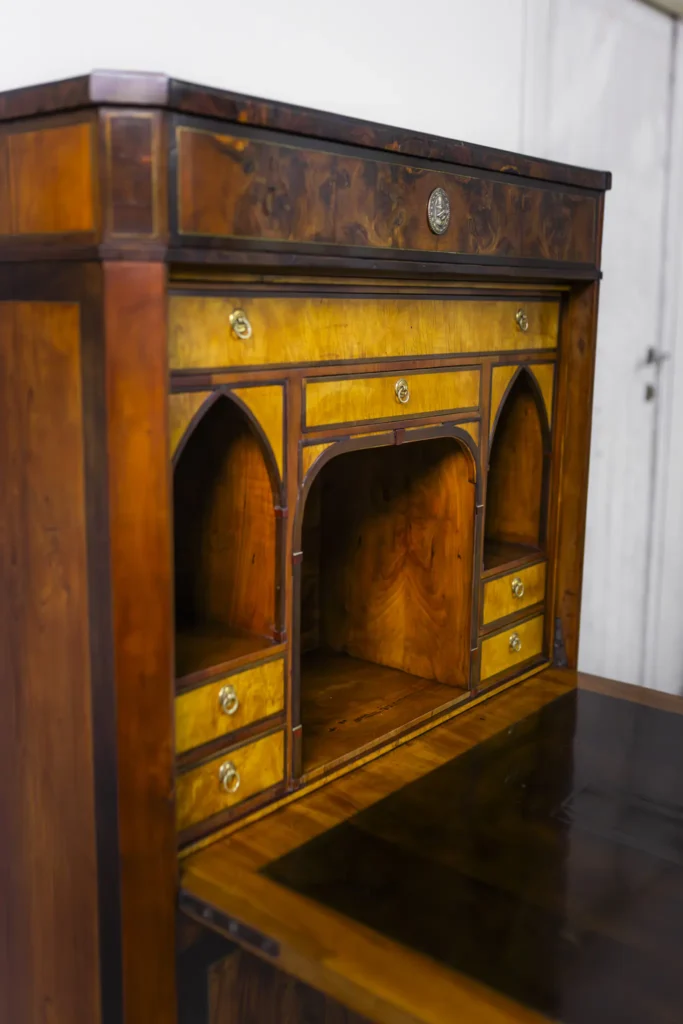
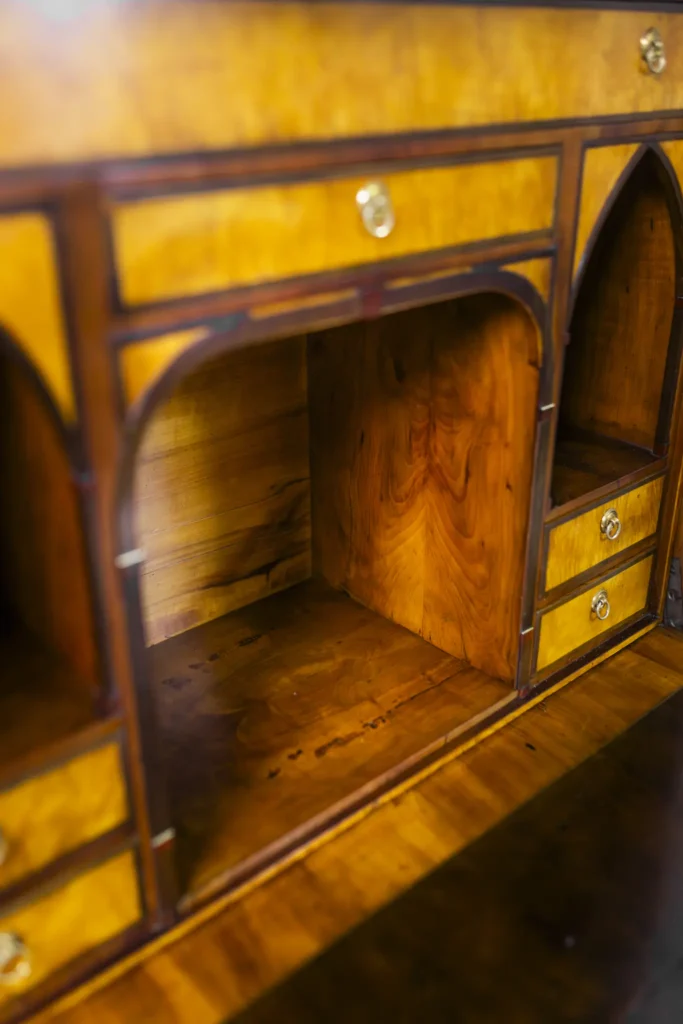
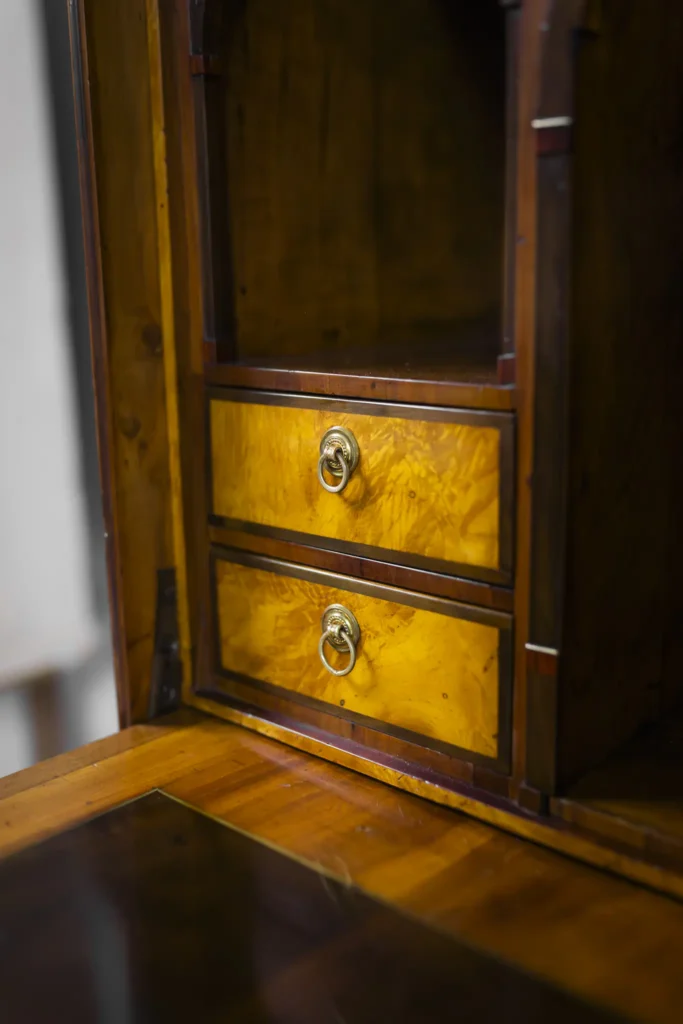
For professionals specializing in professional furniture restoration, preserving the completeness of an object is far from guaranteed in the Polish reality. Due to turbulent wartime history, collector-grade furniture or museum pieces that haven’t lost their drawers or other key details reach us extremely rarely. Especially furniture from Warsaw’s tenement houses, which ended up on street barricades during the Warsaw Uprising—if it survived the war at all—is usually incomplete and heavily damaged.
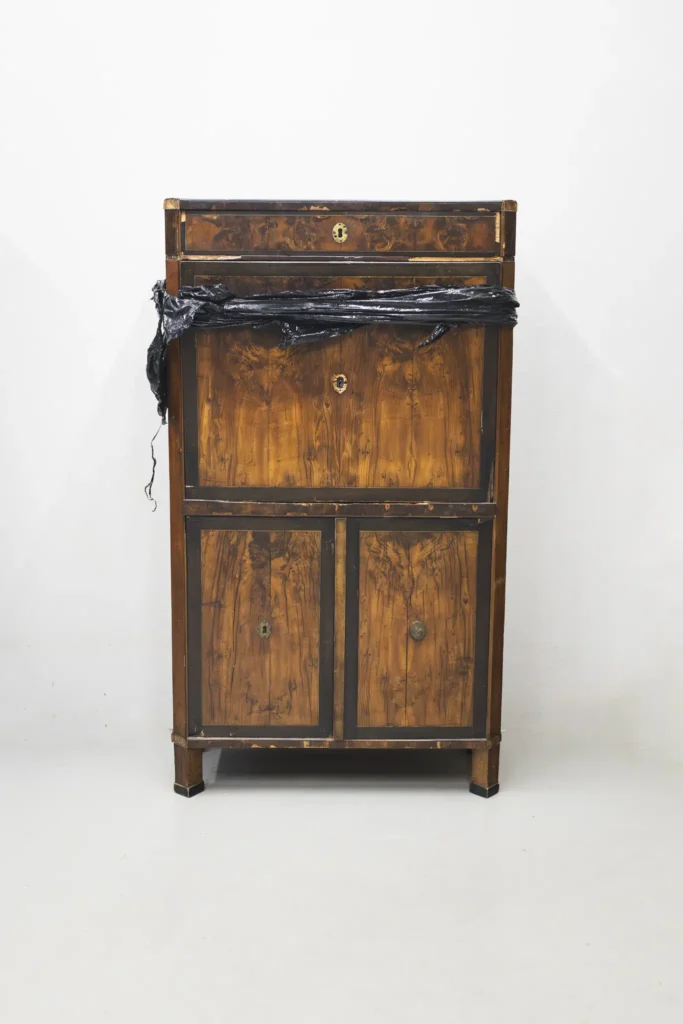
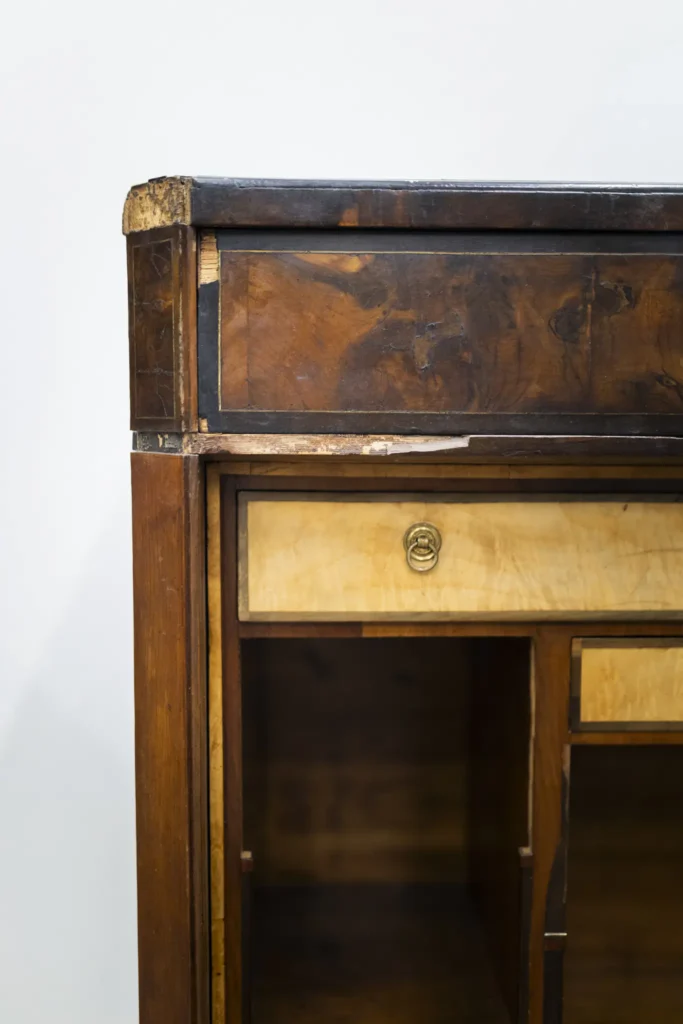
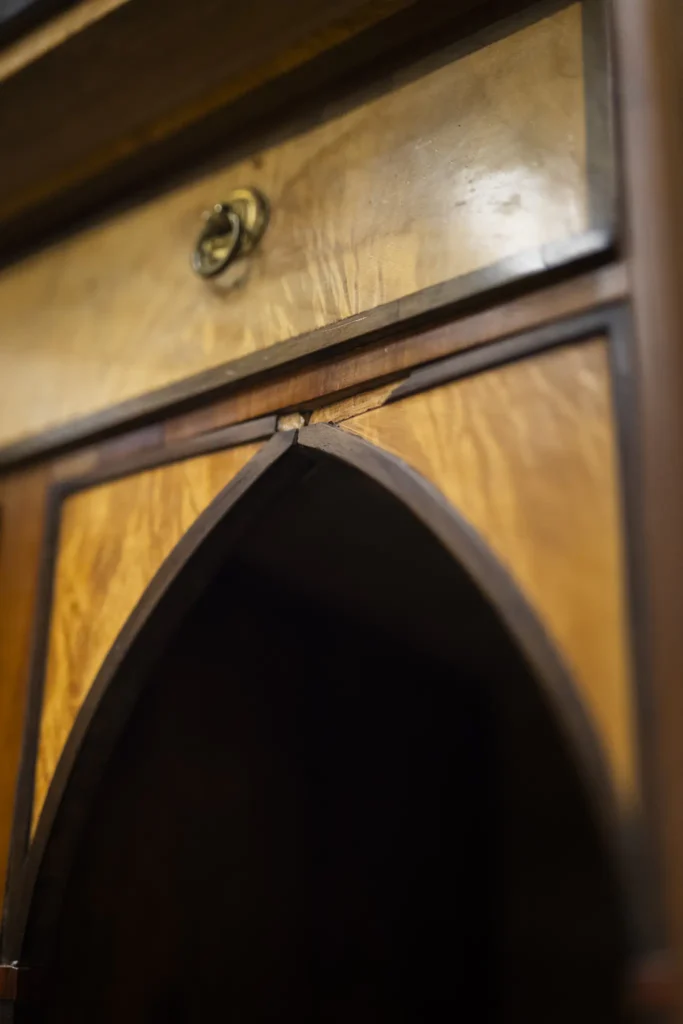
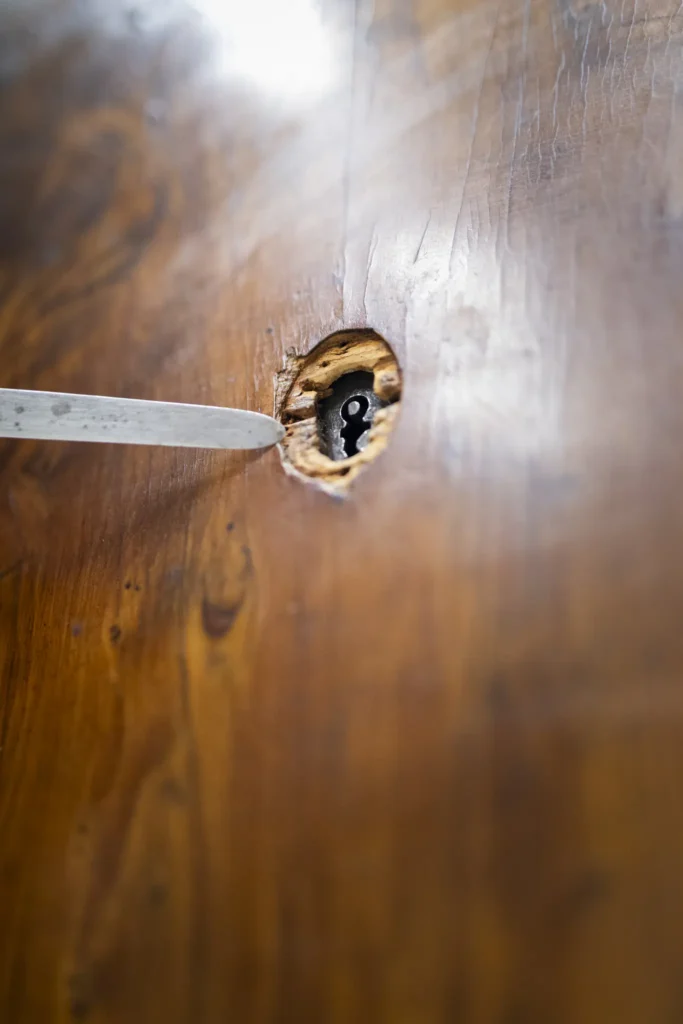
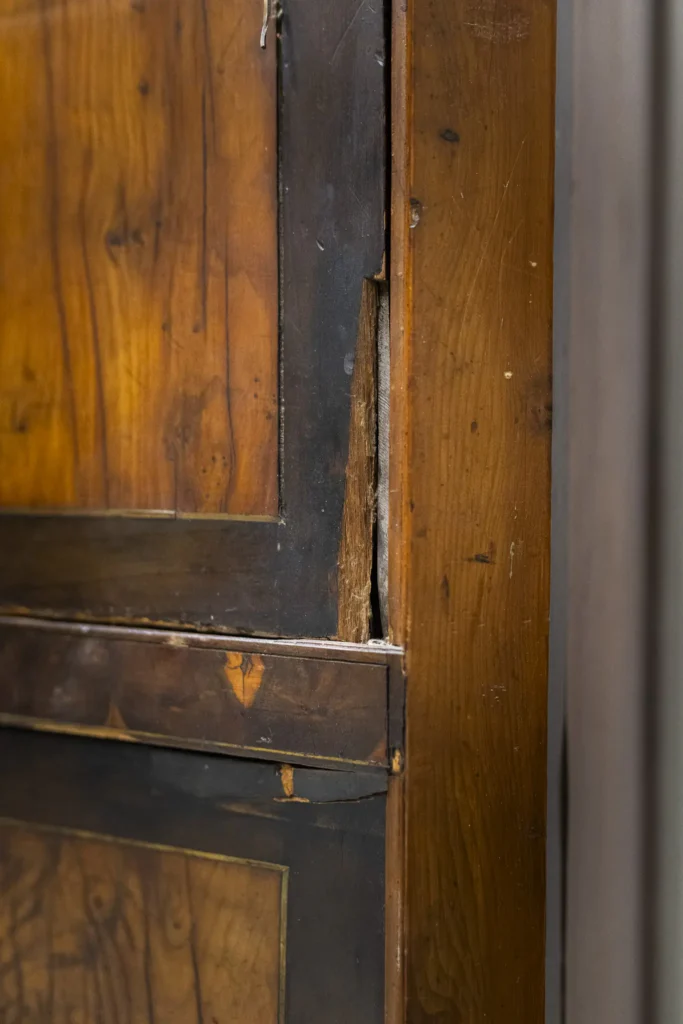
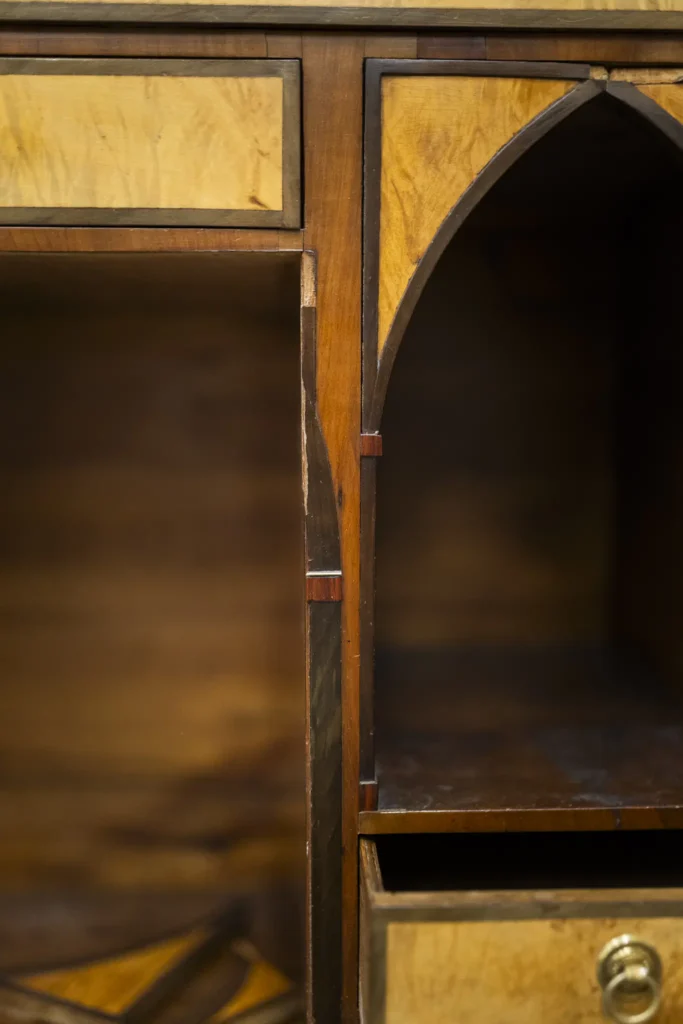
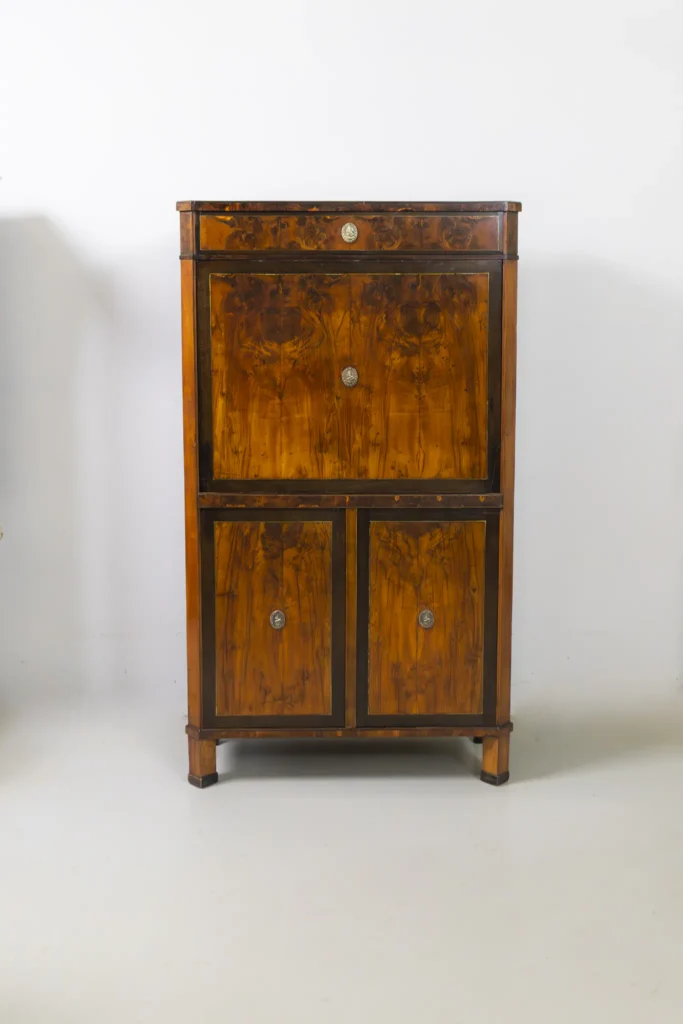
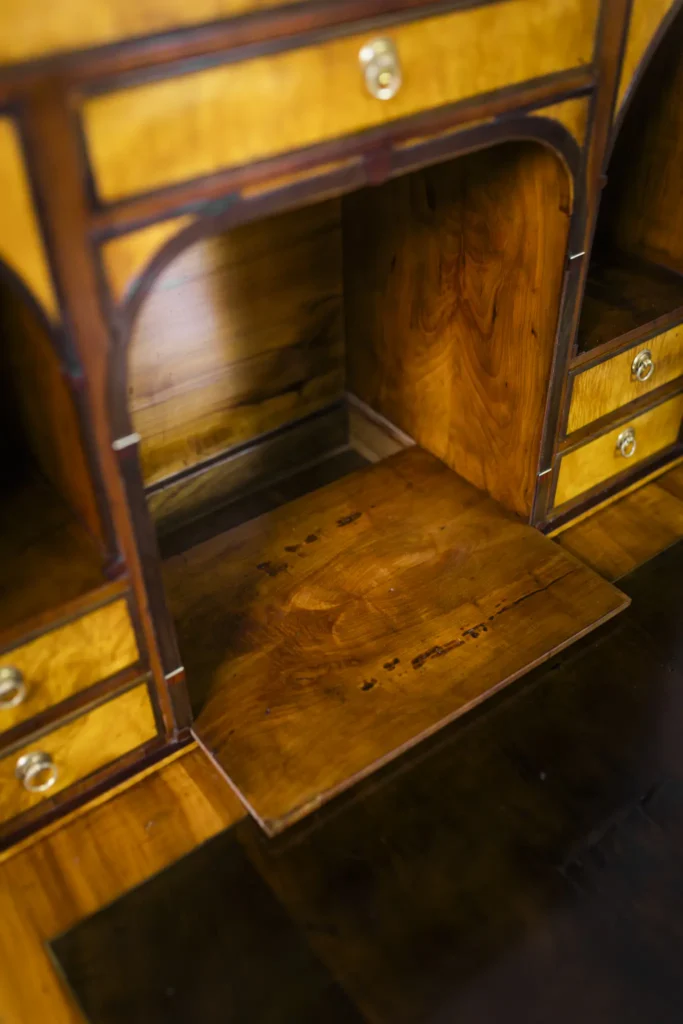
The described object is a unique, museum-grade piece of furniture with unusual proportions (80 × 32 × 141,5 cm), drawing inspiration from French forms circa 1770. This was a time when the position of women in society was strengthening, hence the growing popularity of dainty feminine furniture. In terms of decoration, the piece references the Viennese Empire style and early Biedermeier from the years 1820–1840.

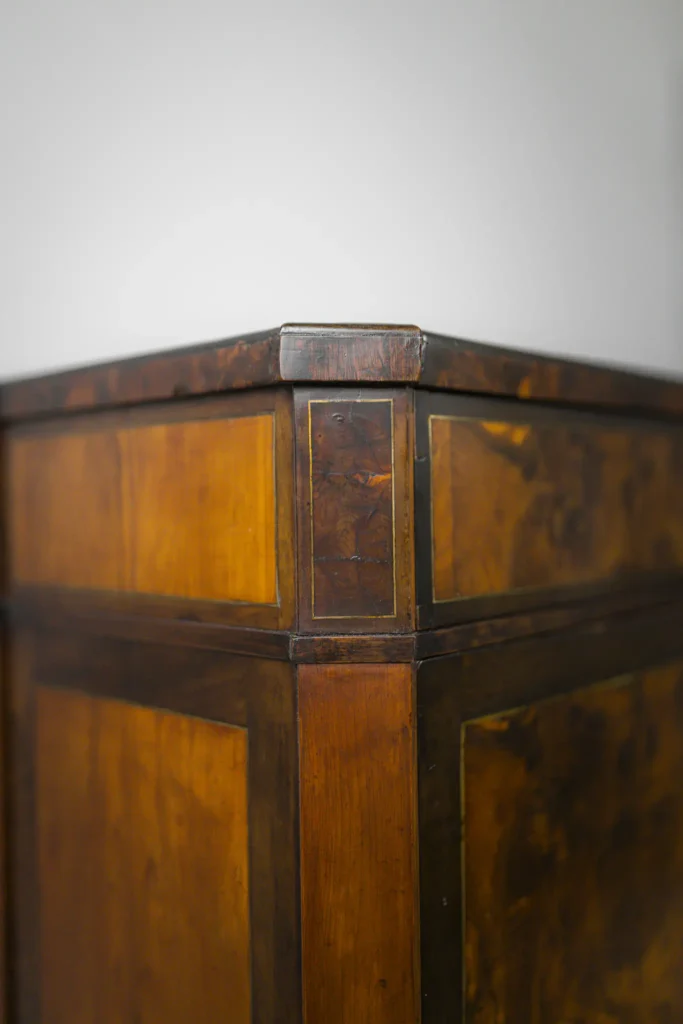
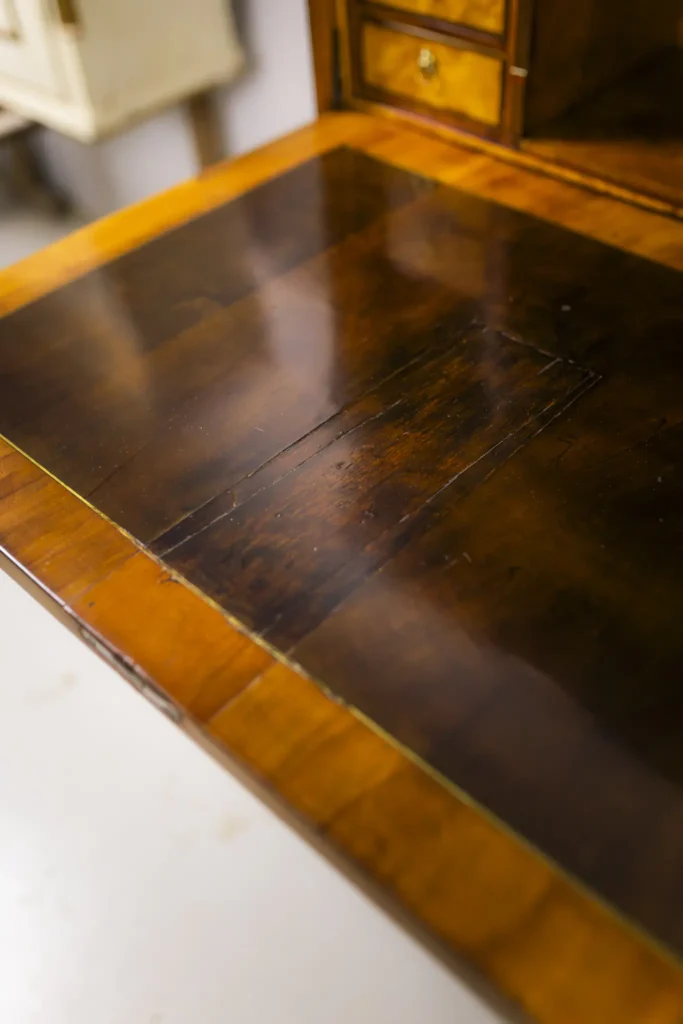
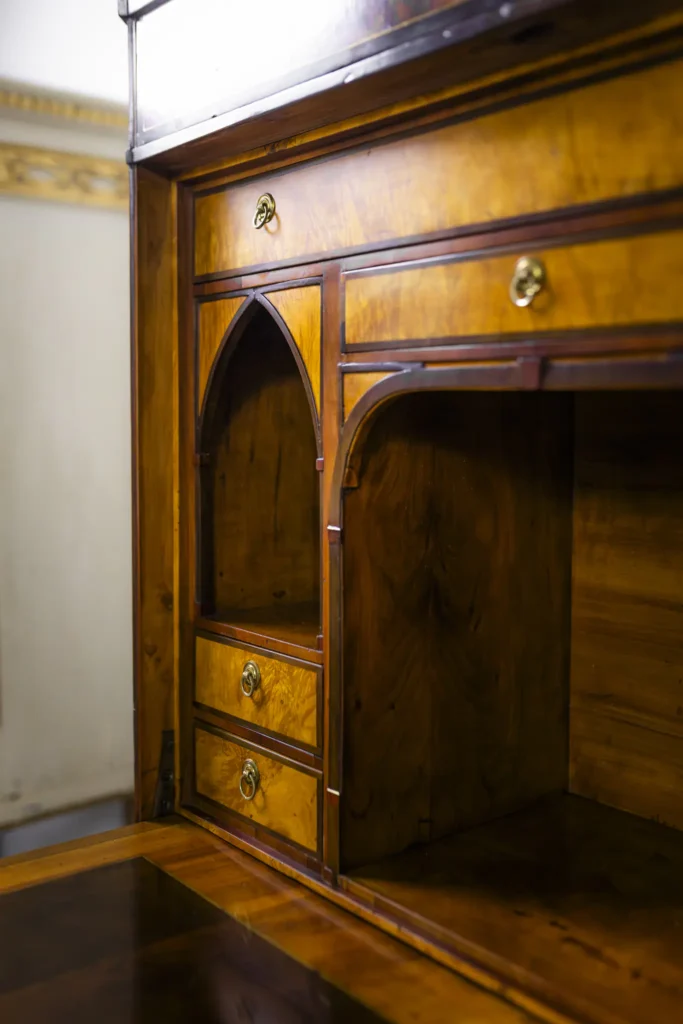
For the Square Drop experts, proper conservation of furniture and priceless museum objects means that the workshop’s intervention remains almost imperceptible:
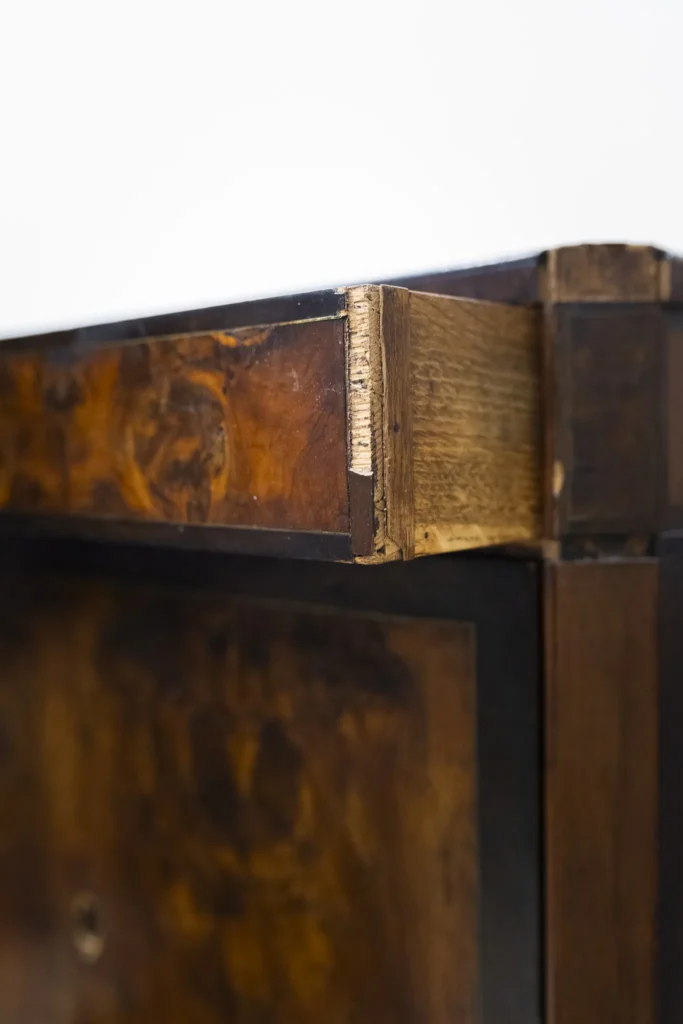
- Material selection: For filling in the losses, we used exclusively old wood species with color and grain patterns perfectly matched to the original.
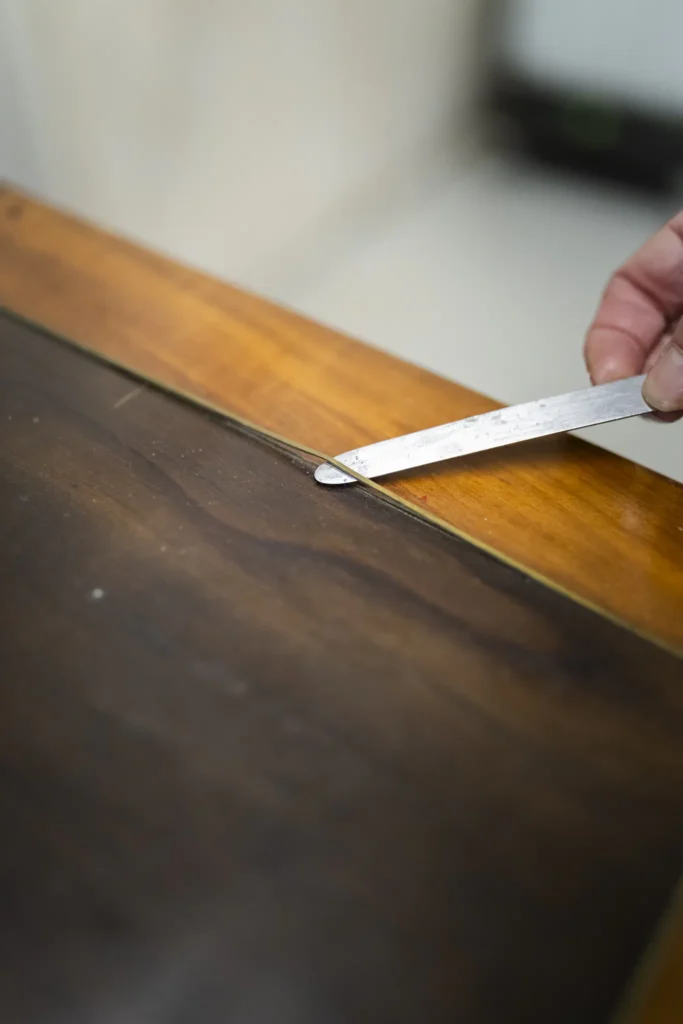
- Patination of details: The newly inserted brass stringing underwent a patination process to eliminate a sharp contrast with the antique finish.
- Protection of the patina: The piece of furniture was not subjected to sanding. After gently cleaning the surface, we applied a layer of traditional shellac polish, and protected the whole with natural beeswax, giving the surface a noble, satin finish.
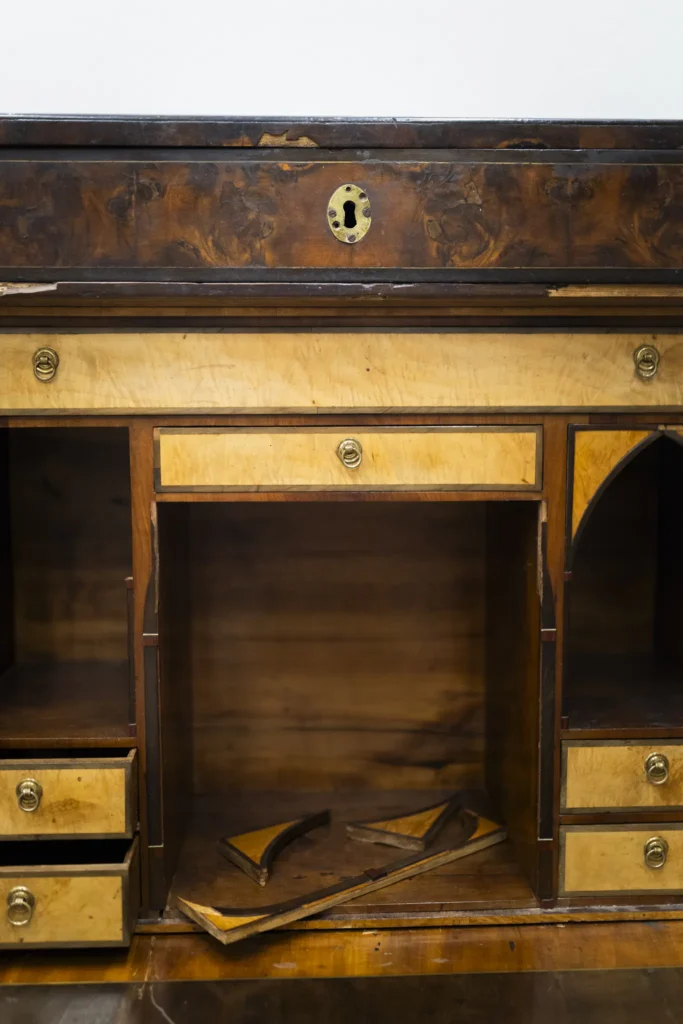
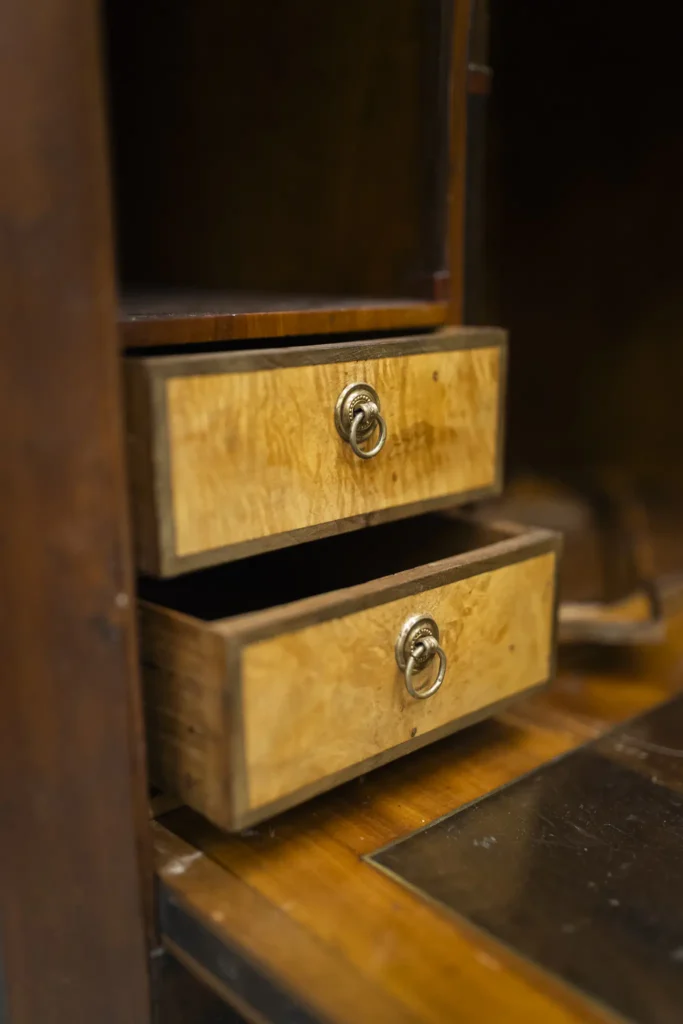
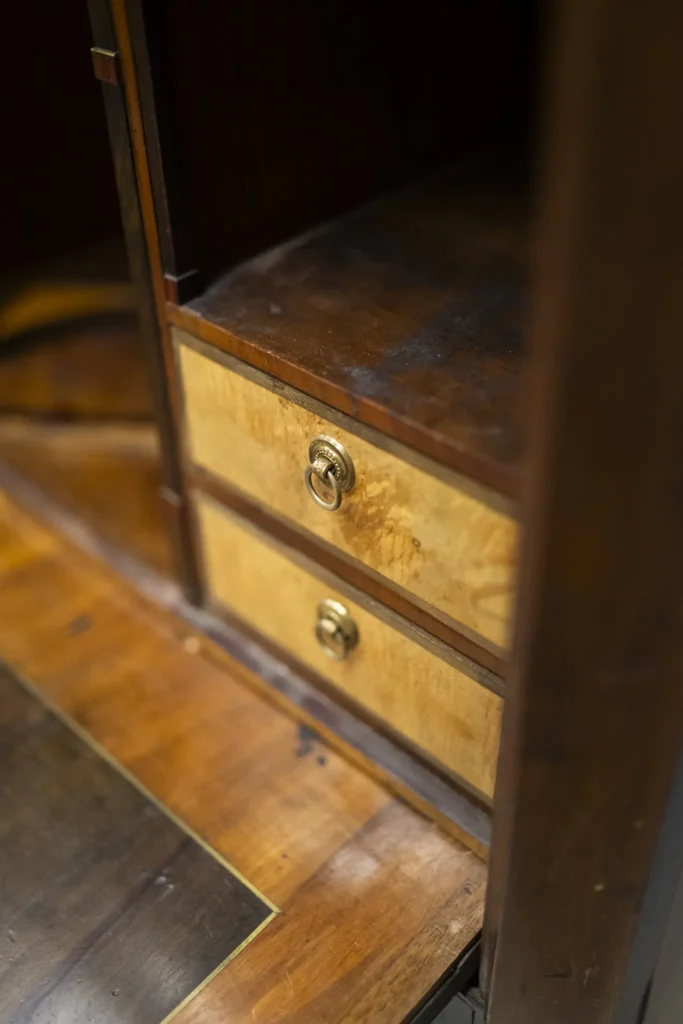
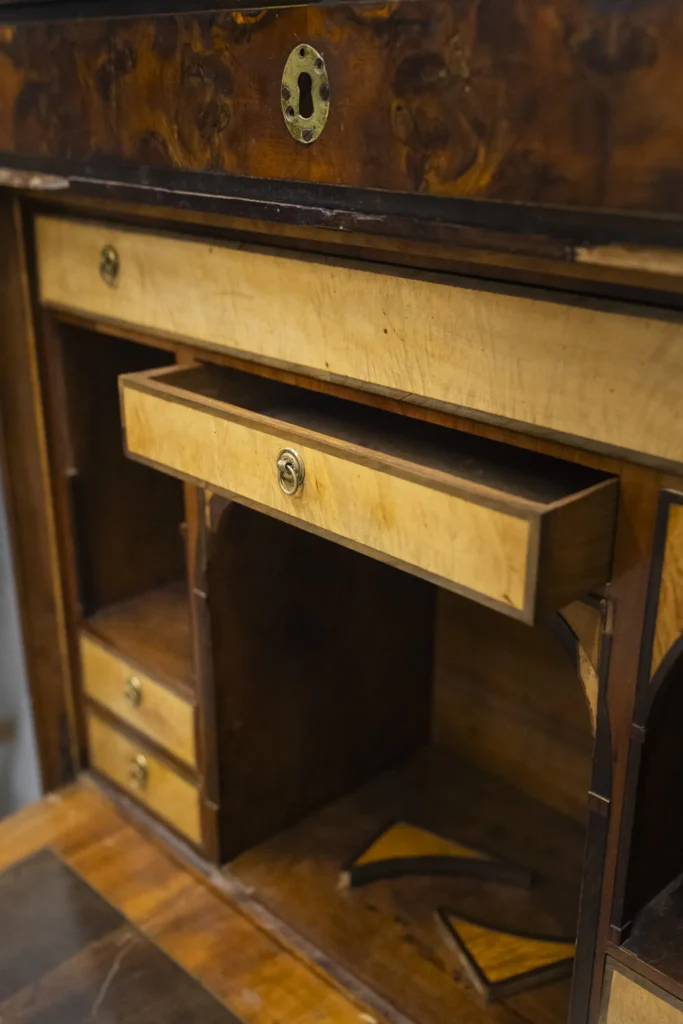
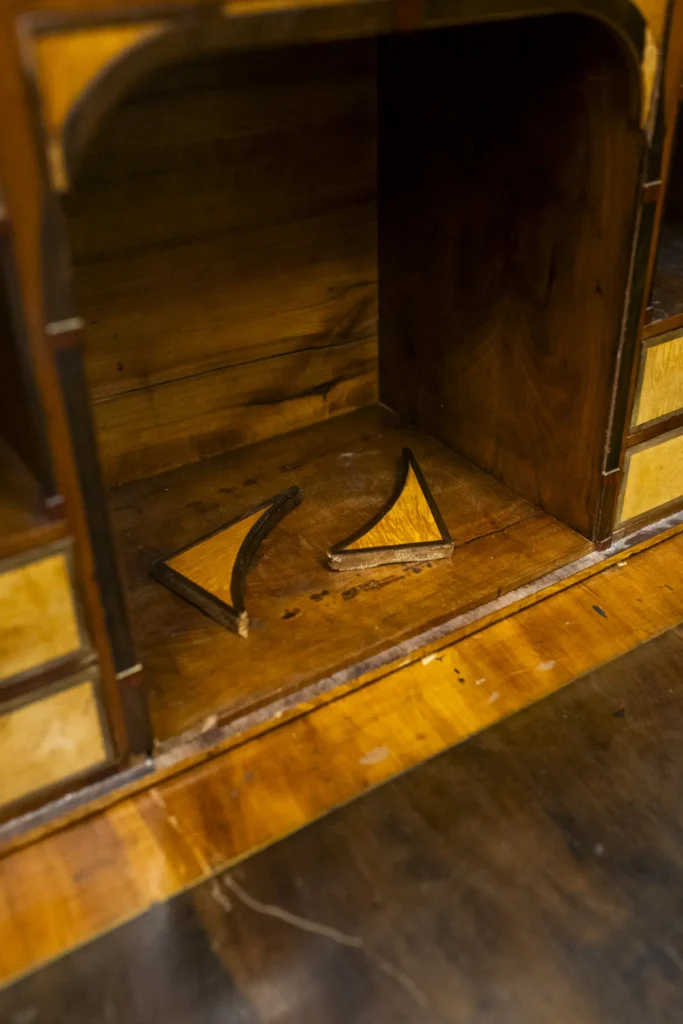
Our conservation process of the secretaire de dame from a Polish collection proves how properly executed antique furniture restoration allows us to preserve its authenticity, history, and market value.
Want to see what this process looks like behind the scenes? Visit the Square Drop YouTube channel, where we publish short video materials showing individual stages of work, as well as full, cinematic conservation documentation. You can find more unique projects directly at squaredrop.pl.
Bibliography:
Andrews J., “Antique furniture”, 1997
Grzeluk I., “Słownik terminologiczny mebli”, Warszawa 1998
Kjellberg P., “Historia mebli europejskich. Od średniowiecza do współczesności, ze szczególnym uwzględnieniem wzorów francuskich”, Warszawa 2014
Volpini L., “Il mobile Biedermeier, Dal Congresso di Vienna al 1848”, 1999