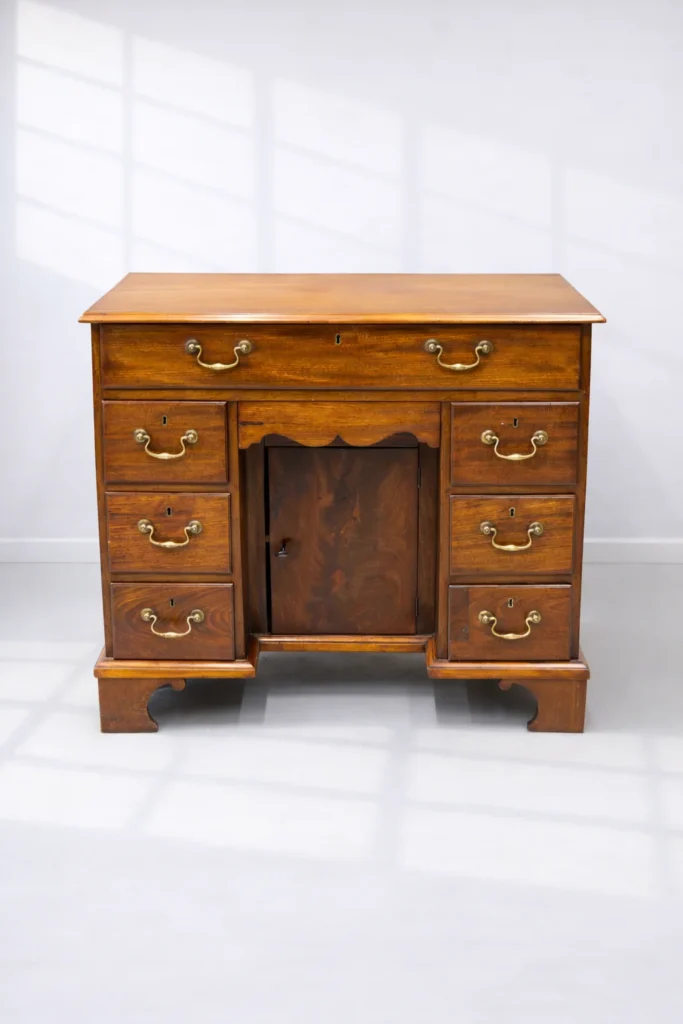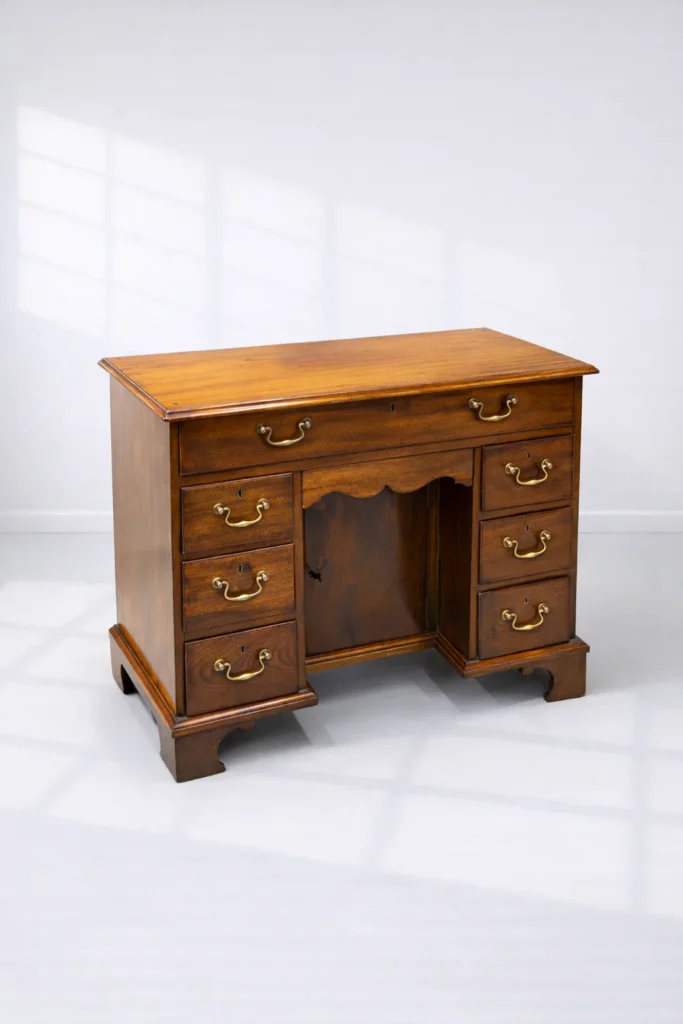
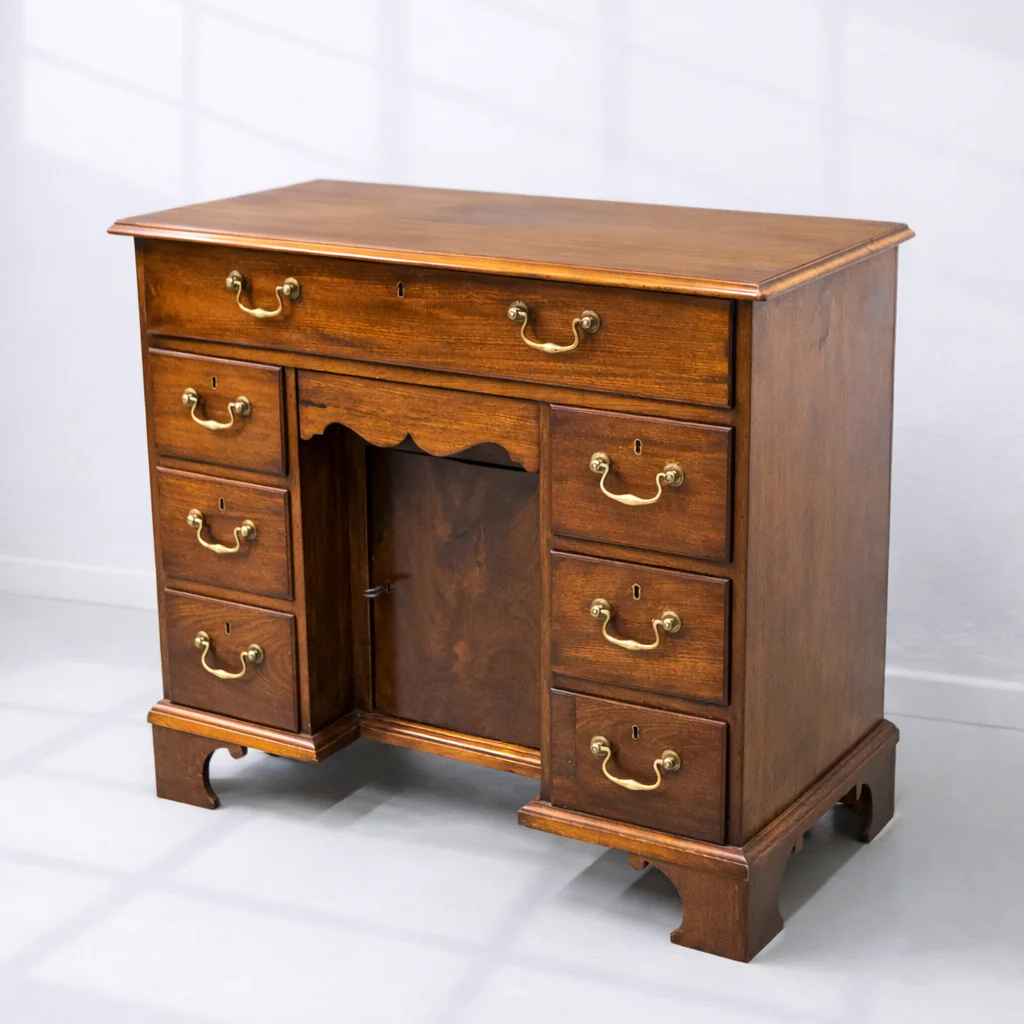
This elegant antique English mahogany kneehole desk is a beautiful example of classic proportions and historical character. After a careful conservation in our workshop, the mahogany has retained a charming, warm honey hue—a natural result of decades of sun exposure, which has softened the wood’s original dark tones to reveal a luminous, golden glow.
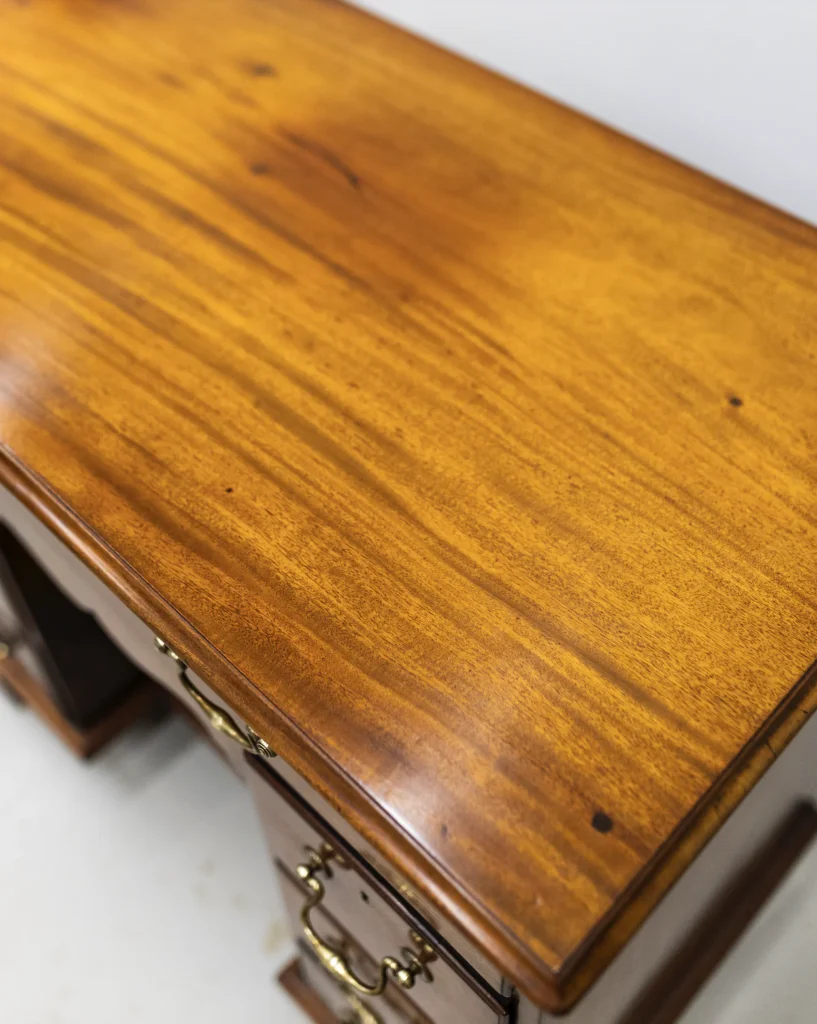
A standout feature of this piece is the subtle, darker shade on the desktop, serving as a mark of the desk’s past. We can imagine this was the spot where a previous owner kept a favorite book or journal for many years. At Square Drop, we intentionally preserve these elements of authentic patina, as they anchor the furniture in its own history and ensure its status as a unique piece.
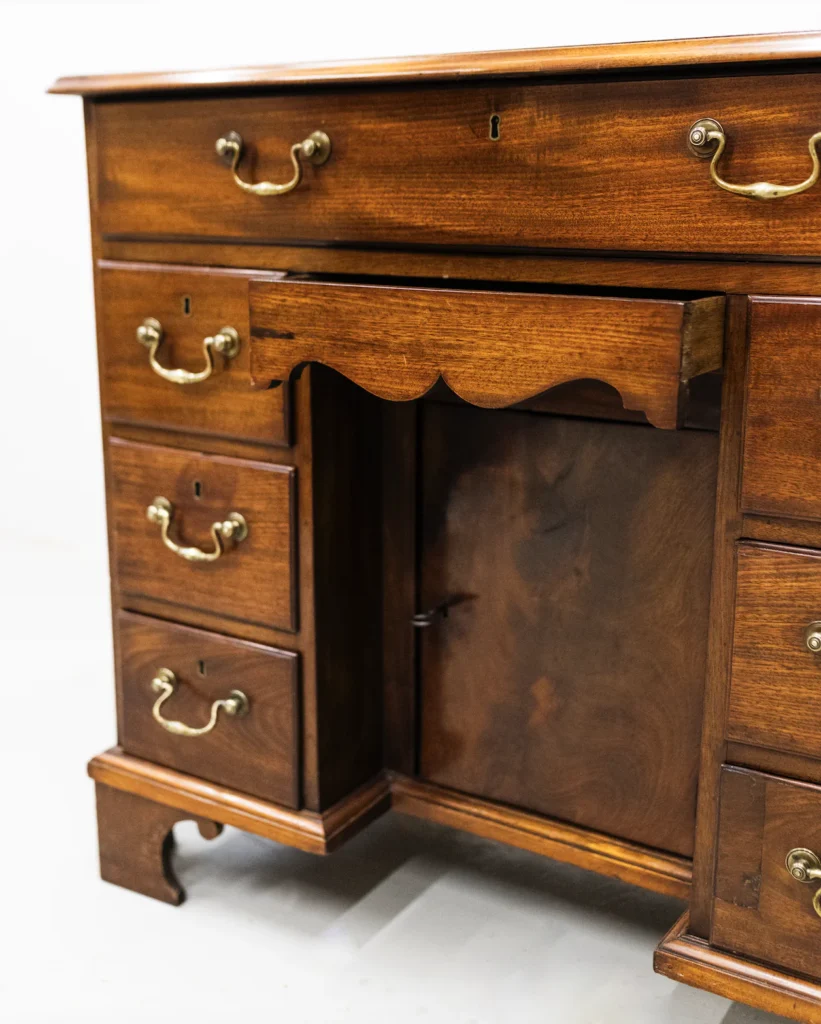
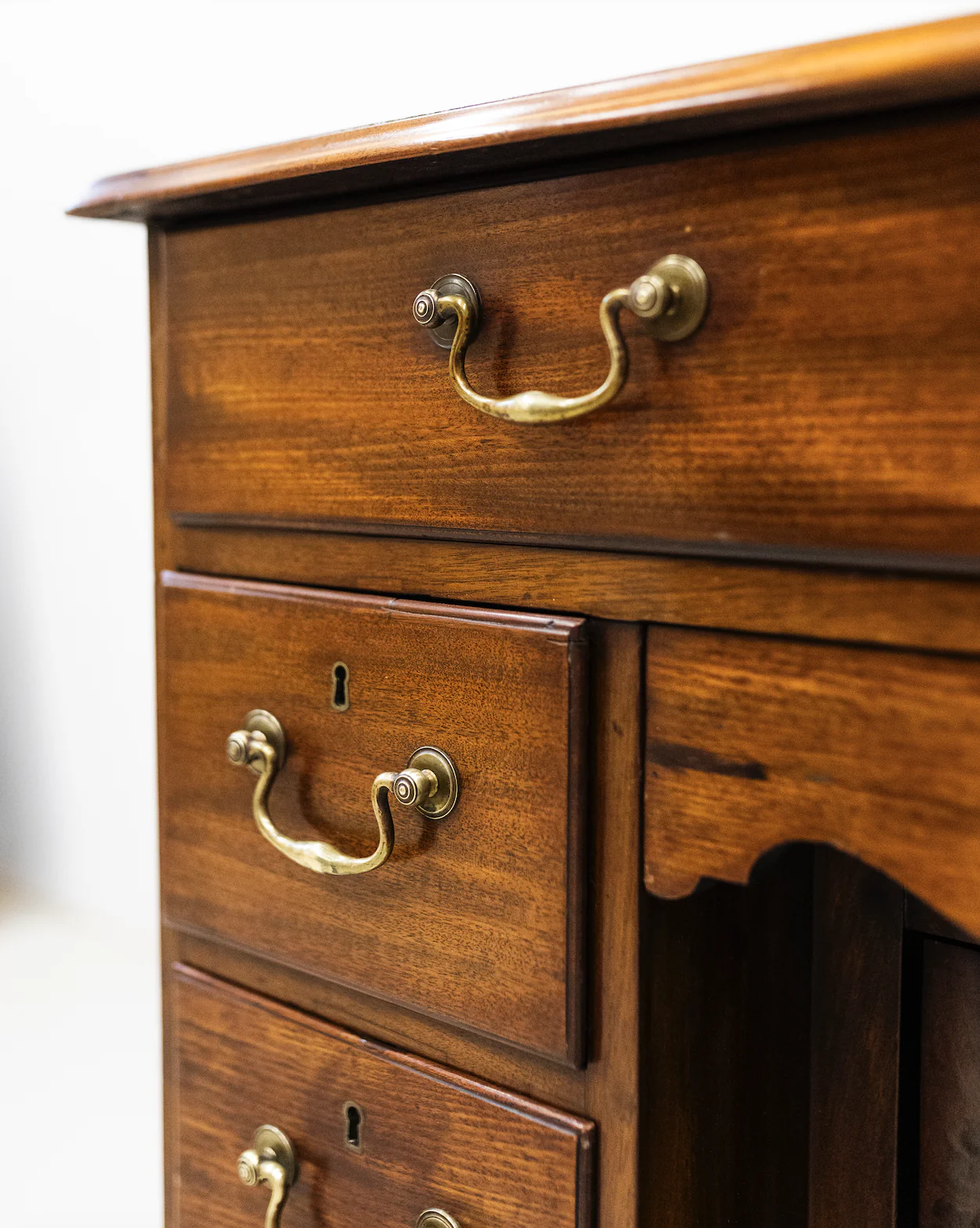
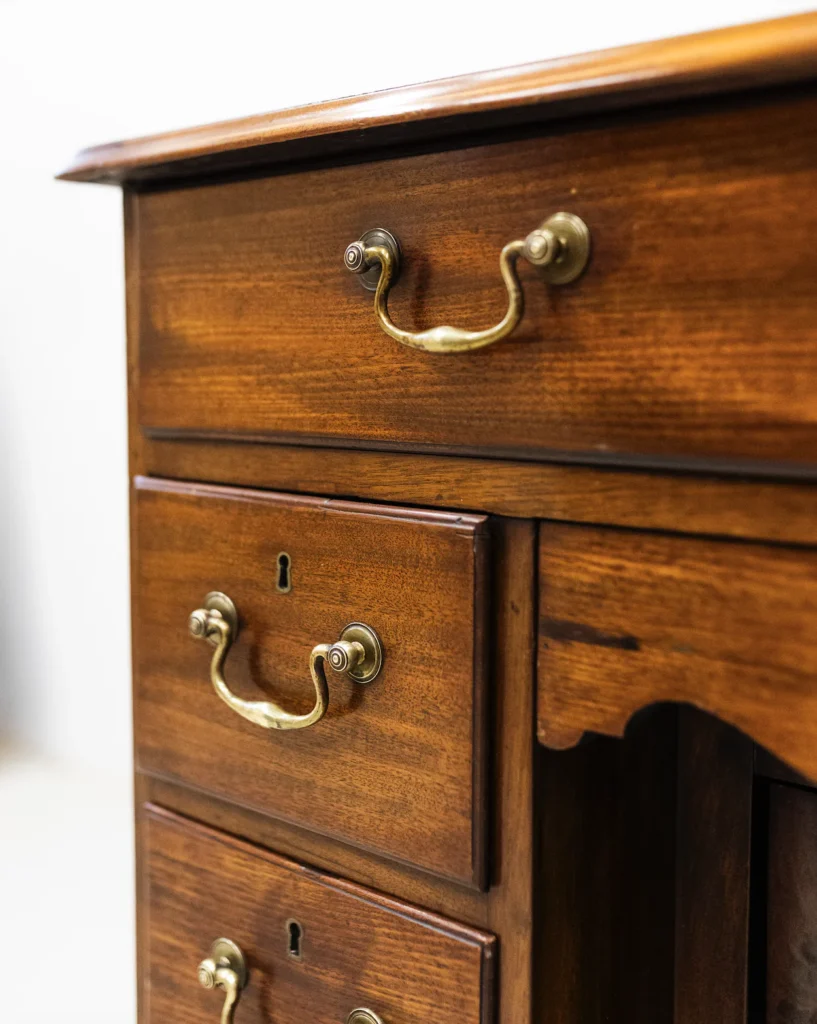
Designed with both elegance and utility in mind, the desk features a central cupboard within the kneehole and a drawer discreetly hidden behind a subtle profile. All primary drawers retain their original locks, complemented by the brass swan-neck handles so characteristic of English period furniture.
Why is it called a “Kneehole Desk”? The recessed central cupboard was originally designed to provide space for the user’s legs (the “knee hole”), but it also provided extra storage. Interestingly, in the 18th century, these desks were dual-purpose: they served as both writing desks and dressing tables. A classic English kneehole desk almost always follows a “3-1-3” drawer arrangement (three drawers on each side, one long drawer at the top).
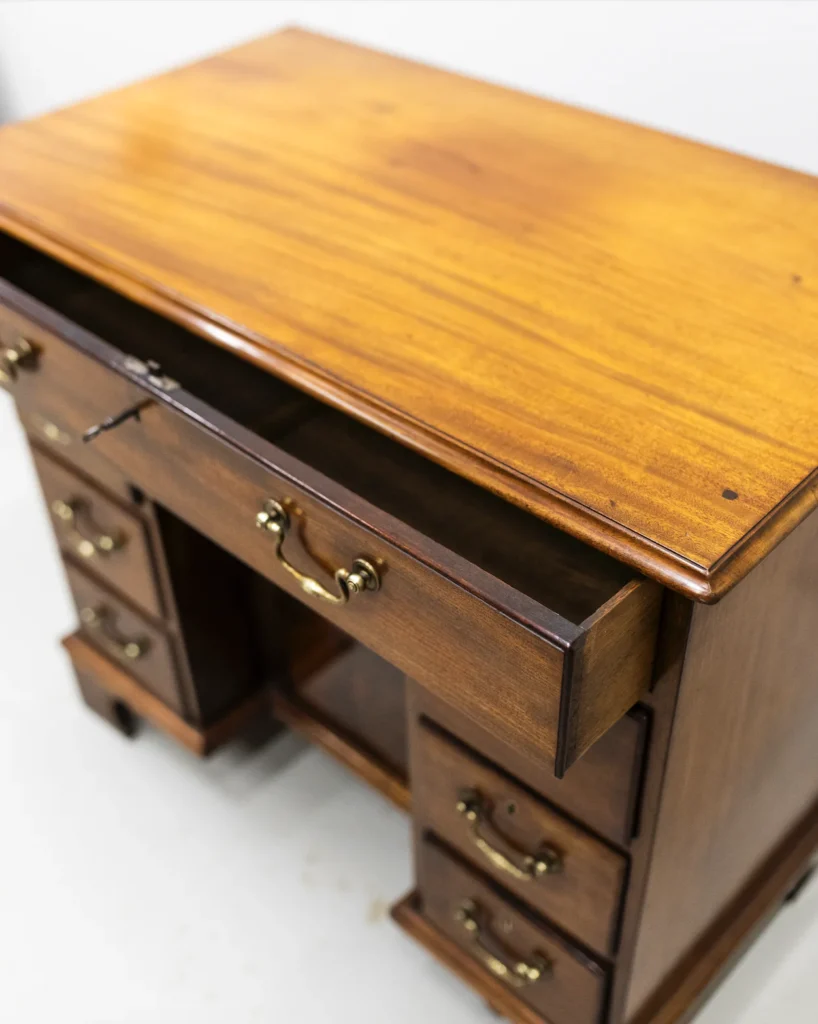
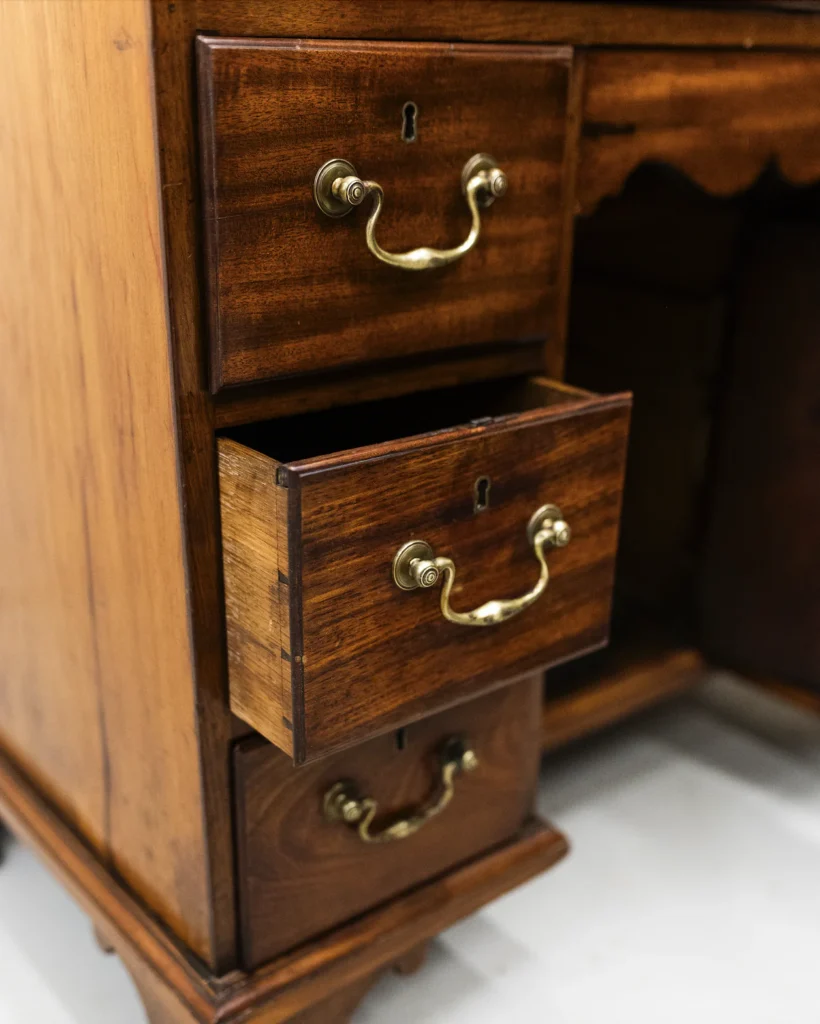
The Kneehole Desk first appeared in England during the early 18th century (the Queen Anne and Early Georgian periods). While it was later adapted by cabinetmakers in other countries, its heart remains firmly in British furniture history. It was a revolutionary design in British furniture. Before this, most desks were large “bureau-cabinets” or simple tables. The English kneehole desk was designed as a compact, elegant solution for libraries and dressing rooms.
The kneehole desk is a fascinating piece of furniture history because it marks the transition from heavy, architectural pieces to more refined, “portable” luxury.
Beyond its design, the materials used for these desks evolved significantly through the 18th and 19th centuries, reflecting the trade routes and tastes of the time. Before mahogany took over, the earliest kneehole desks (Queen Anne period) were made of Walnut.
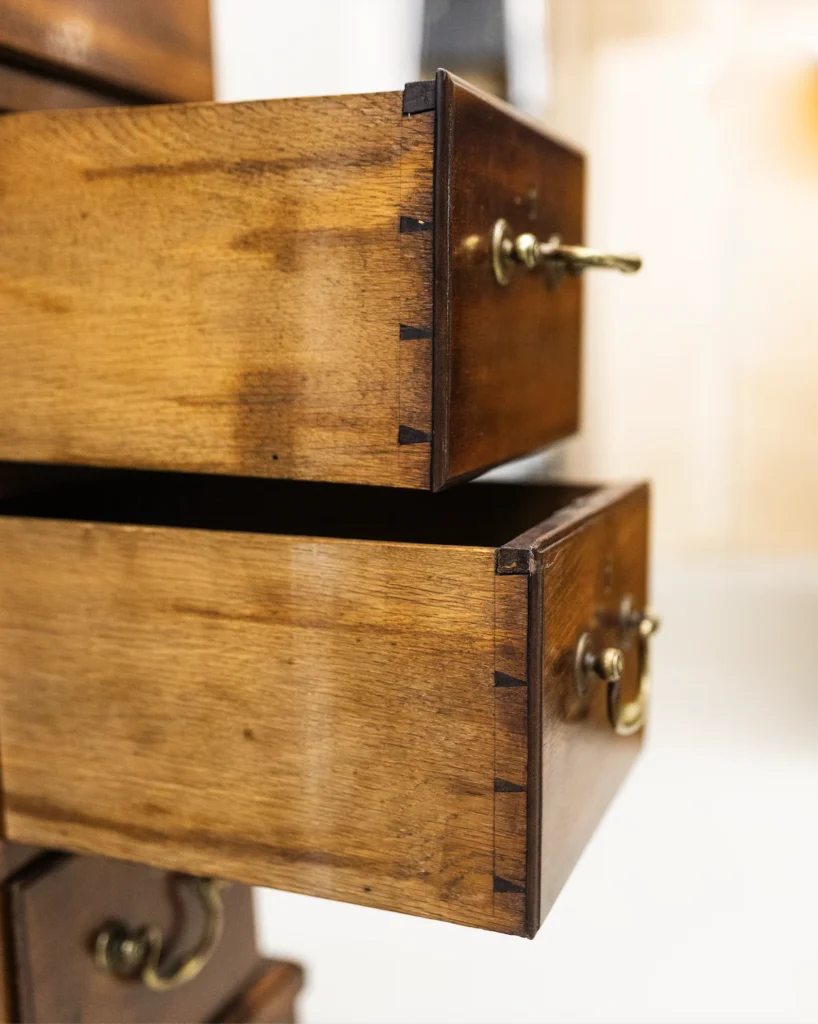
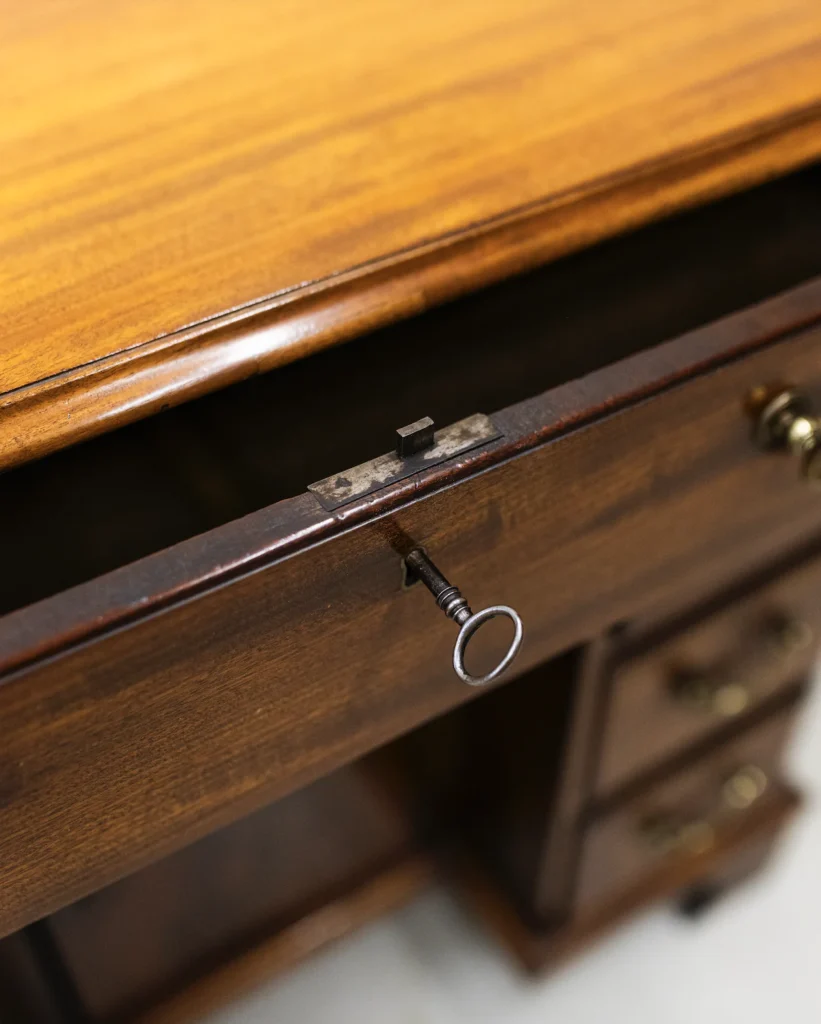
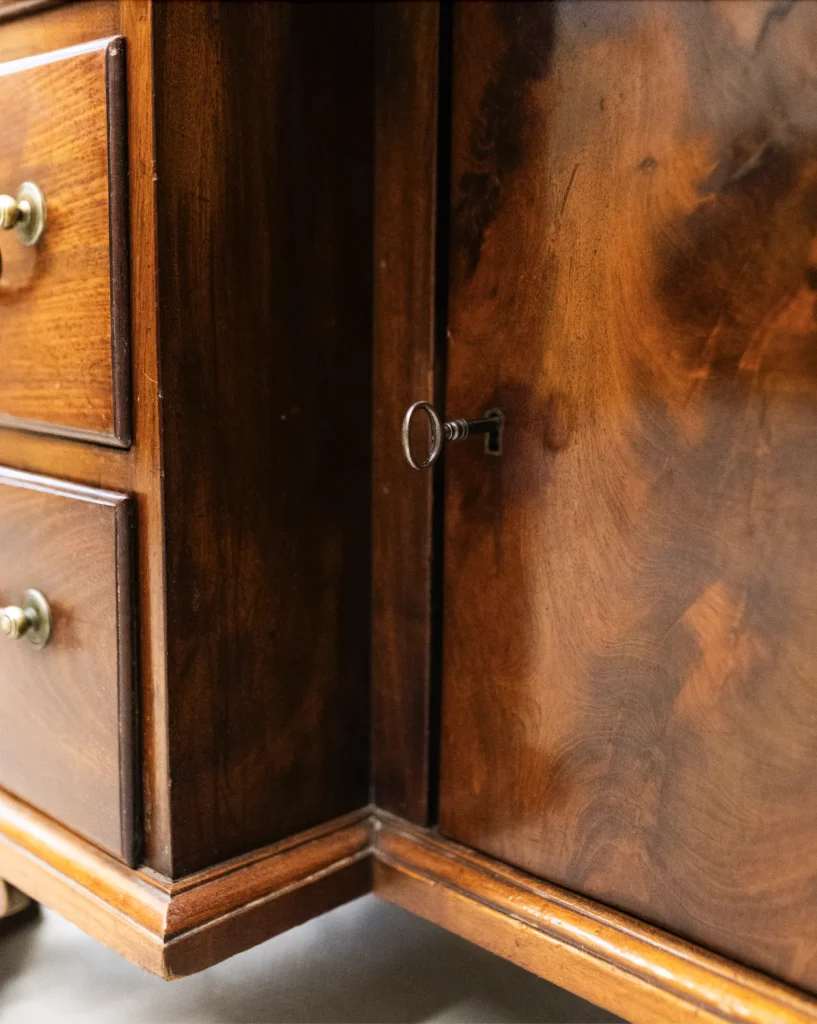
Mahogany became the gold standard for kneehole desks from roughly 1730 onwards. For our piece of furniture it was probably imported from British Honduras as it is lighter in weight and lighter in color than f.e. Cuban of Jamaican mahogany. It is also often the type that matures into that beautiful honey-gold color you see on our desk after years of sun exposure.
Cabinetmakers loved mahogany because it was incredibly strong, resistant to warping, and allowed for the subtle profiles and crisp carvings as you see on our piece. While it starts dark, mahogany “bleaches” beautifully in the sun, leading to that honey color which collectors often prefer over the original dark reddish-brown.
A true mark of quality in an English kneehole desk is what is inside. High-end makers used oak which was typically used for drawer linings and the back of the desk in high-quality English pieces.